




Research checked: 6 November 2026. David Jones administration employee entitlements questions need three separate answers: what has happened to the employer, what has happened to your employment, and what money has actually arrived. A company appointment alone does not answer the other two.
The public McGrathNicol creditor index records the David Jones Group’s voluntary administration appointment on 5 November 2026. Its appointment metadata identifies a concurrent receivers-and-managers appointment involving FTI Consulting. This guide does not assume that every worker has lost their job or that any individual is eligible for government assistance.
Administration is different from liquidation
ASIC’s employee guide to voluntary administration explains that appointing an administrator does not automatically end employees’ employment. Administration is a process for determining the company’s future; a company can also have receivers appointed.
For an individual worker, the relevant facts include the legal employer named on the employment documents, whether employment continues, the period a payment relates to and any written notice received. A retail brand, store location and legal employing entity may not be interchangeable.
Keep current work and pay questions separate from unpaid amounts accumulated before an appointment. Ask the appropriate employer representative or insolvency practitioner for written clarification. Do not infer a closure, termination date or payment promise from a general news headline.
Start with your own documents
Keep copies of your contract, payslips, rosters, leave balances, correspondence and payment records. Record the date and source of each update. If somebody gives a verbal answer about your status or money owed, request written confirmation.
Our underpayment evidence checklist can help organise a pay-period file. It is an evidence aid, not a finding that your employer has underpaid you. Preserve private records securely and do not post payslips or identity documents on social media.
What FEG may cover, if you qualify
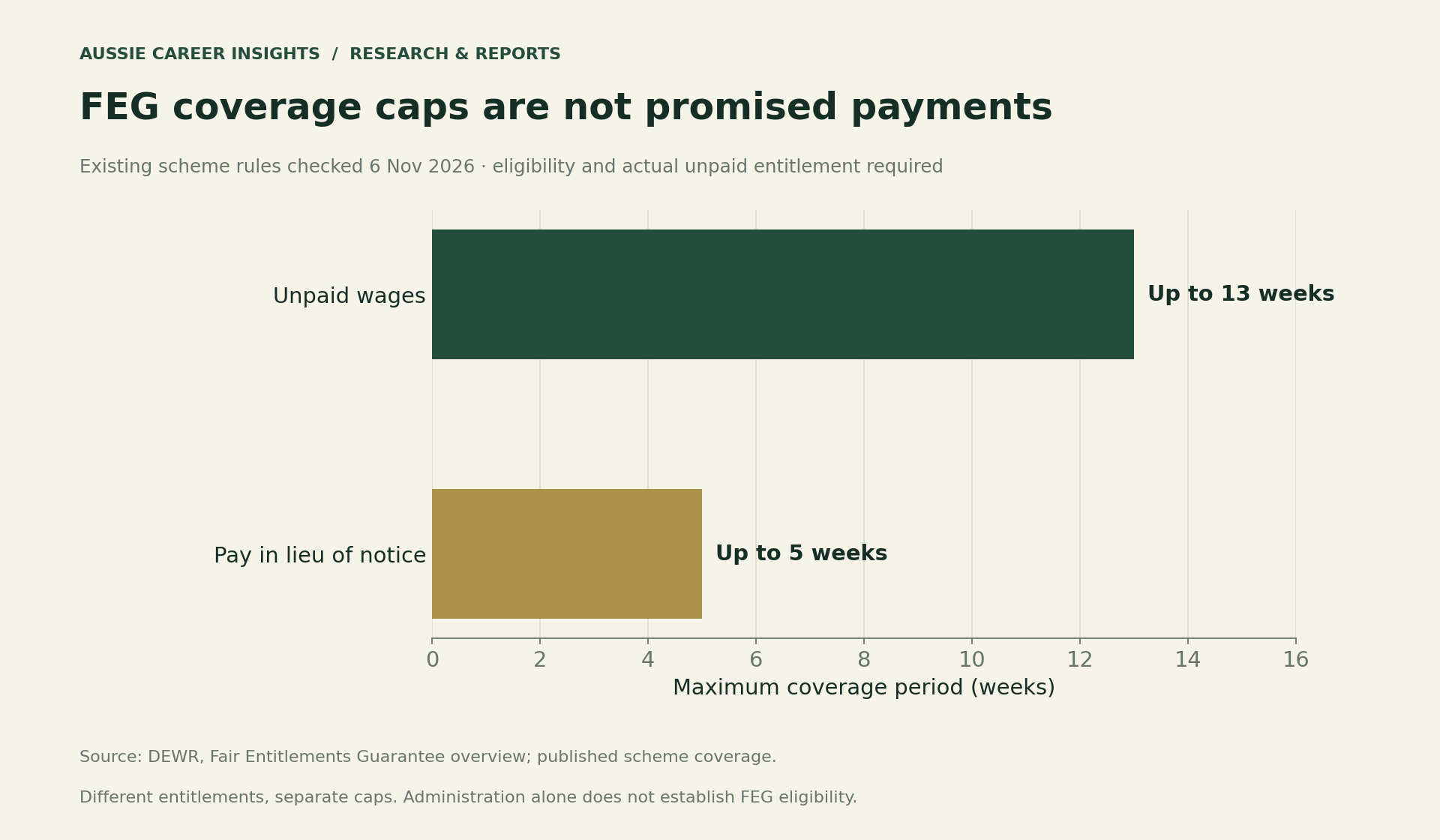
The Fair Entitlements Guarantee overview describes a safety net for eligible employees who lose employment in connection with employer liquidation or bankruptcy and cannot recover covered entitlements through other means. Voluntary administration by itself does not establish FEG eligibility.
The official claim guidance sets out additional requirements, including employment ending, the relevant insolvency circumstances, unpaid entitlements, reasonable recovery steps, status requirements and an effective claim within the applicable deadline. Exclusions also apply. Use the full guidance rather than treating this article as a screening decision.
| Entitlement type | Published FEG coverage or limit | Important distinction |
|---|---|---|
| Unpaid wages | Up to 13 weeks | A maximum coverage period, not a promised payment |
| Annual leave | May be covered if eligible | Actual unpaid entitlement must be established |
| Long service leave | May be covered if eligible | Employment terms and applicable entitlement matter |
| Pay instead of notice | Up to 5 weeks | Does not establish that notice is owed in a particular case |
| Redundancy | Up to 4 weeks per full service year | A scheme cap, not an automatic redundancy entitlement |
| Unpaid superannuation | Not covered by FEG | Check the separate ATO route |
A redundancy cap is not your redundancy award
The published redundancy limit is four weeks for each full year worked. Multiplying that limit by one, three or five full service years gives four, twelve or twenty weeks. That arithmetic describes the cap only.
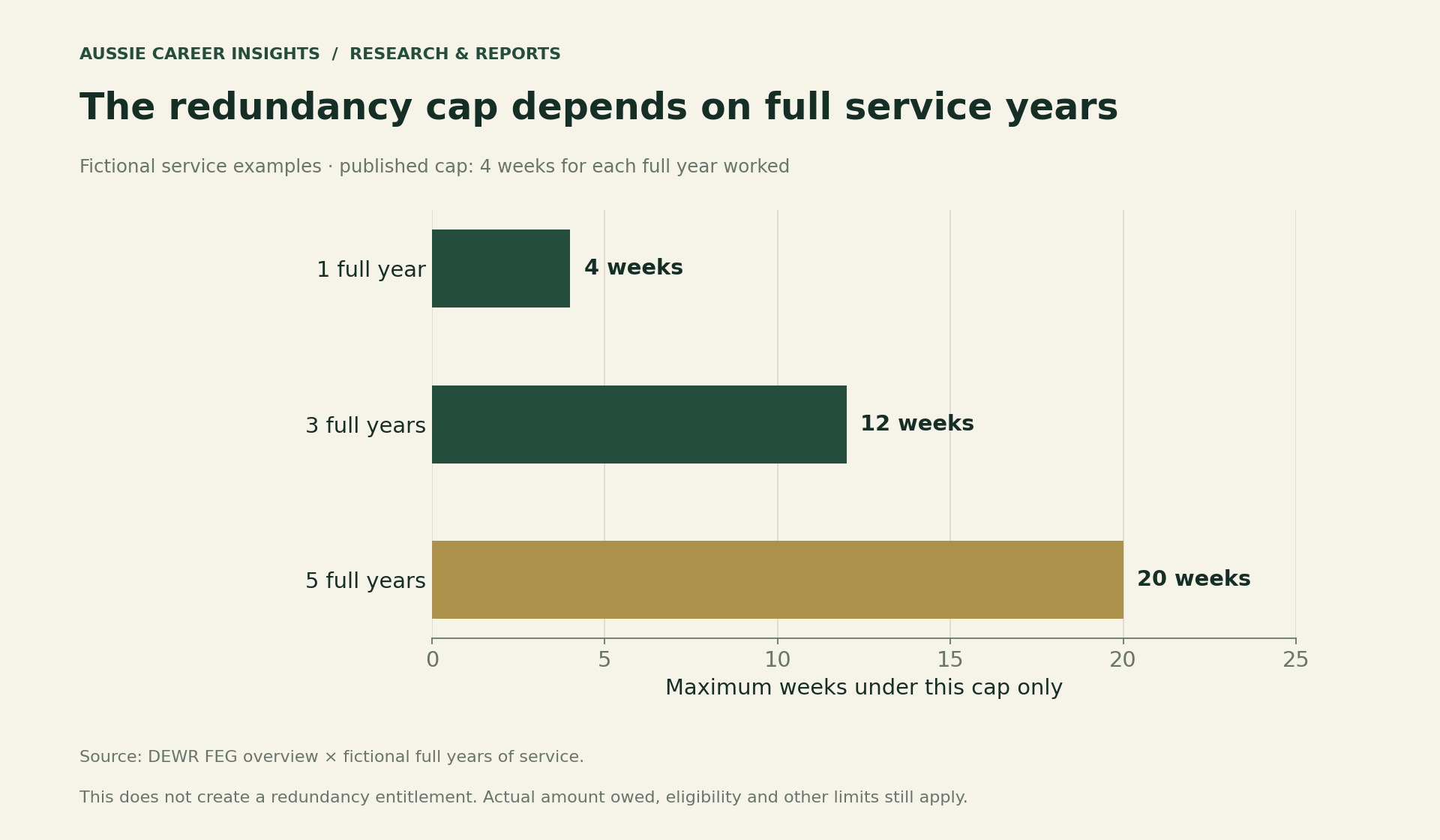
An employee’s actual unpaid redundancy amount may be lower, may be subject to different employment rules, or may not arise at all. Do not add a cap to your household budget as if it were cash you are certain to receive.
Check the maximum weekly wage too
The current assessment guidance lists a maximum weekly wage of A$3,032 for 1 July 2026 to 30 June 2027. This is a scheme assessment limit, not a weekly benefit available to every worker.
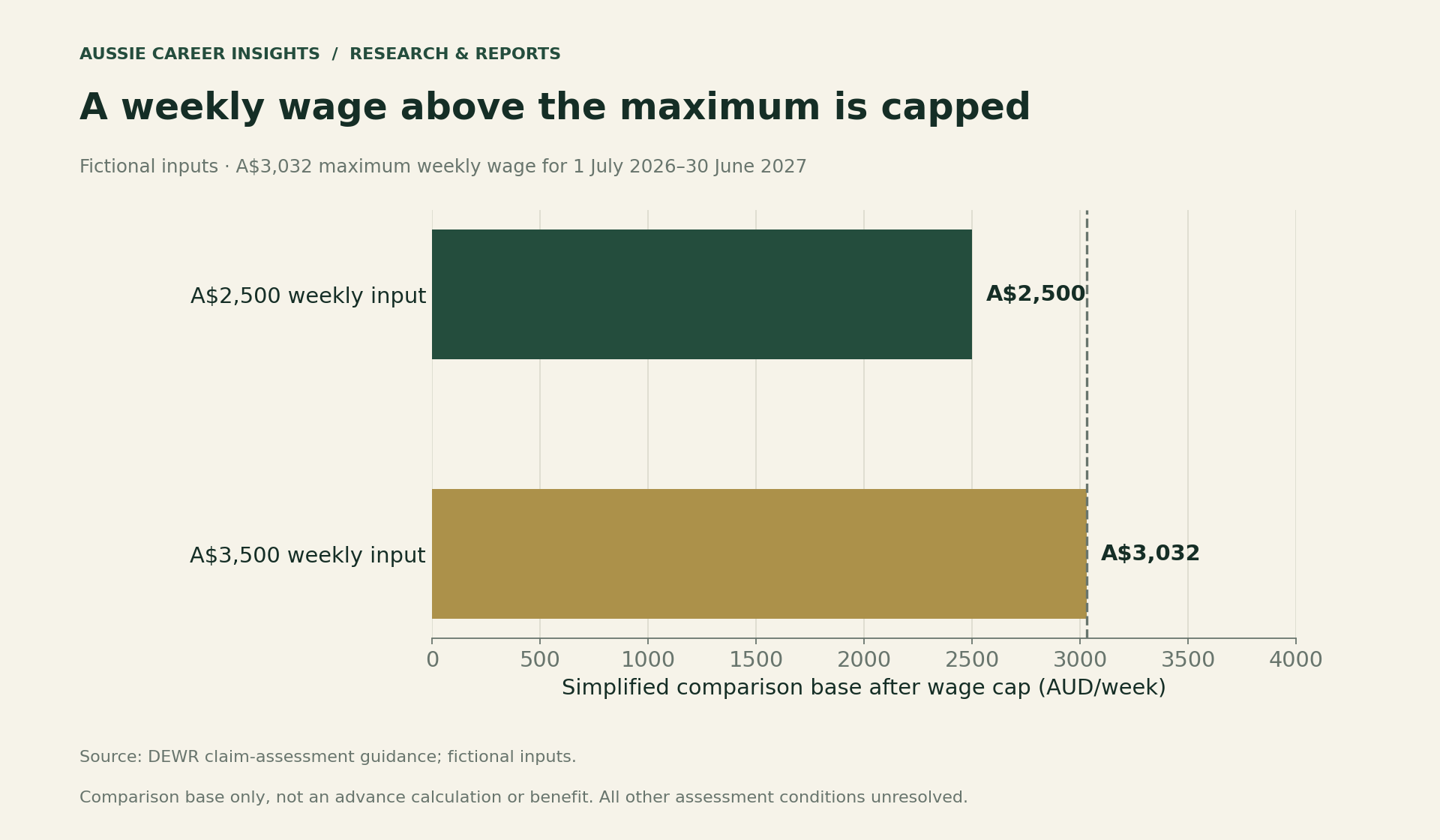
The department checks the claim and employment records. Its decision may also take account of debts to the employer and expected recovery from other sources. The chart does not calculate a payment or decide which entitlement is recoverable.
Keep employment status and cash status separate
Use four starting situations: still employed and paid; still employed but missing pay; employment ended; and employer liquidation or bankruptcy confirmed. These are questions to resolve, not necessarily steps that every worker will experience in that order.
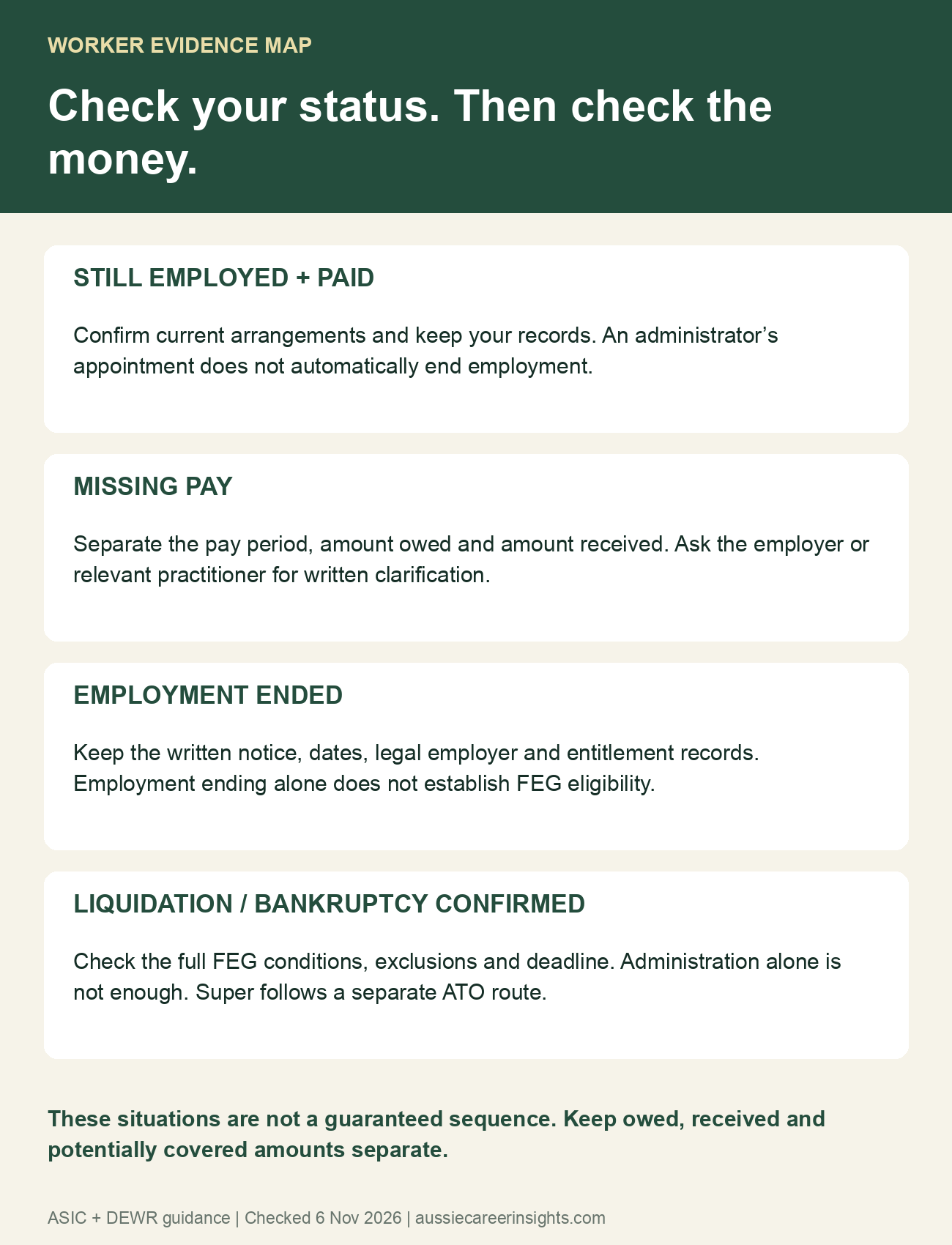
In your records, distinguish amount owed, amount received and amount potentially covered. The last column is conditional and should remain separate until the appropriate authority confirms the position. Include a date and supporting document for each entry.
Your Personalized Career Strategy
Unlock your potential with tailored career consulting. Get clear, actionable steps designed for your success. Start now!
Get StartedPlan essentials without guessing payment timing
For a fictional household with A$800 in weekly essentials, four, eight and twelve weeks without income require A$3,200, A$6,400 and A$9,600. These are sensitivity scenarios, not forecasts of job loss or benefit processing.
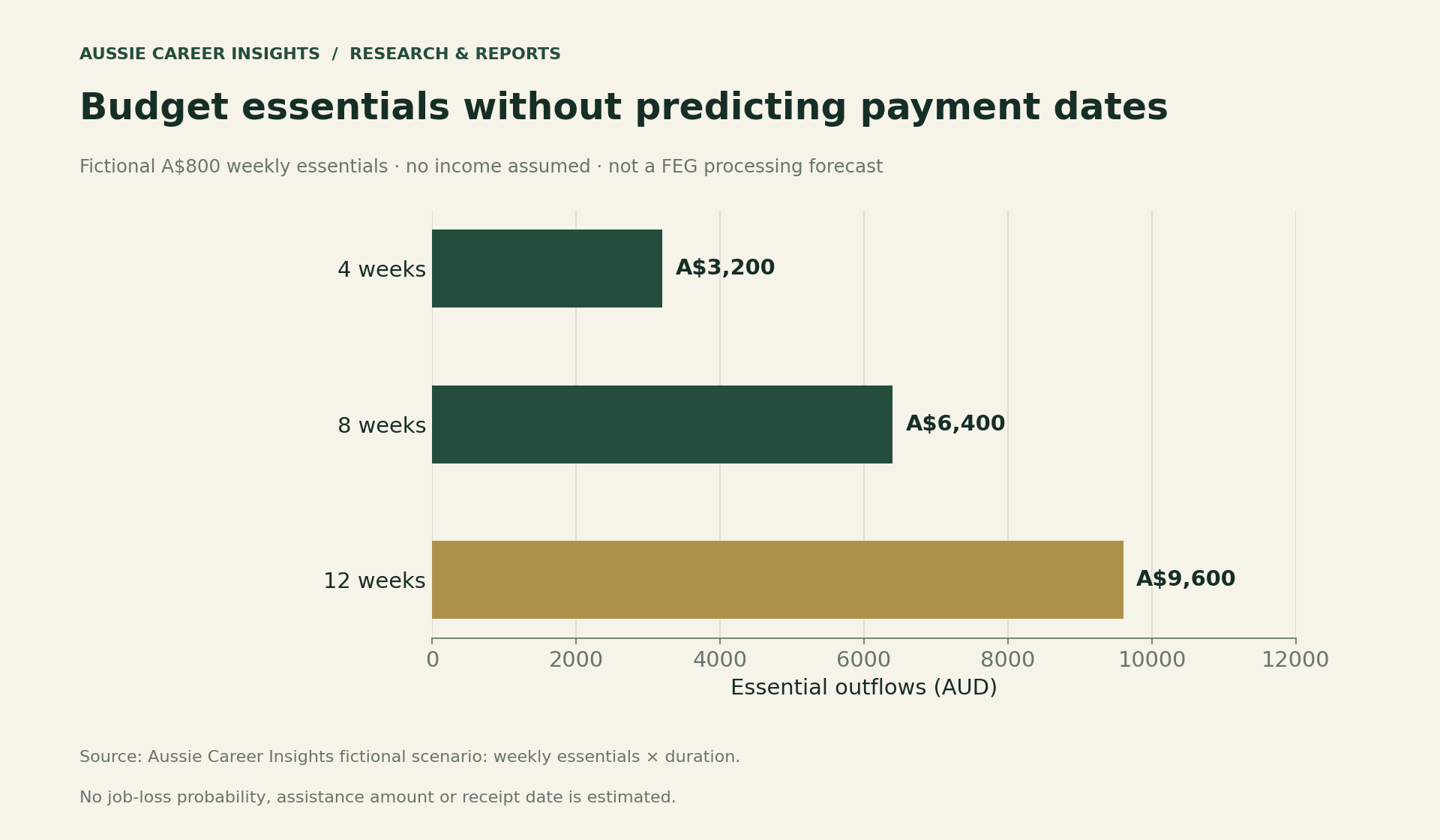
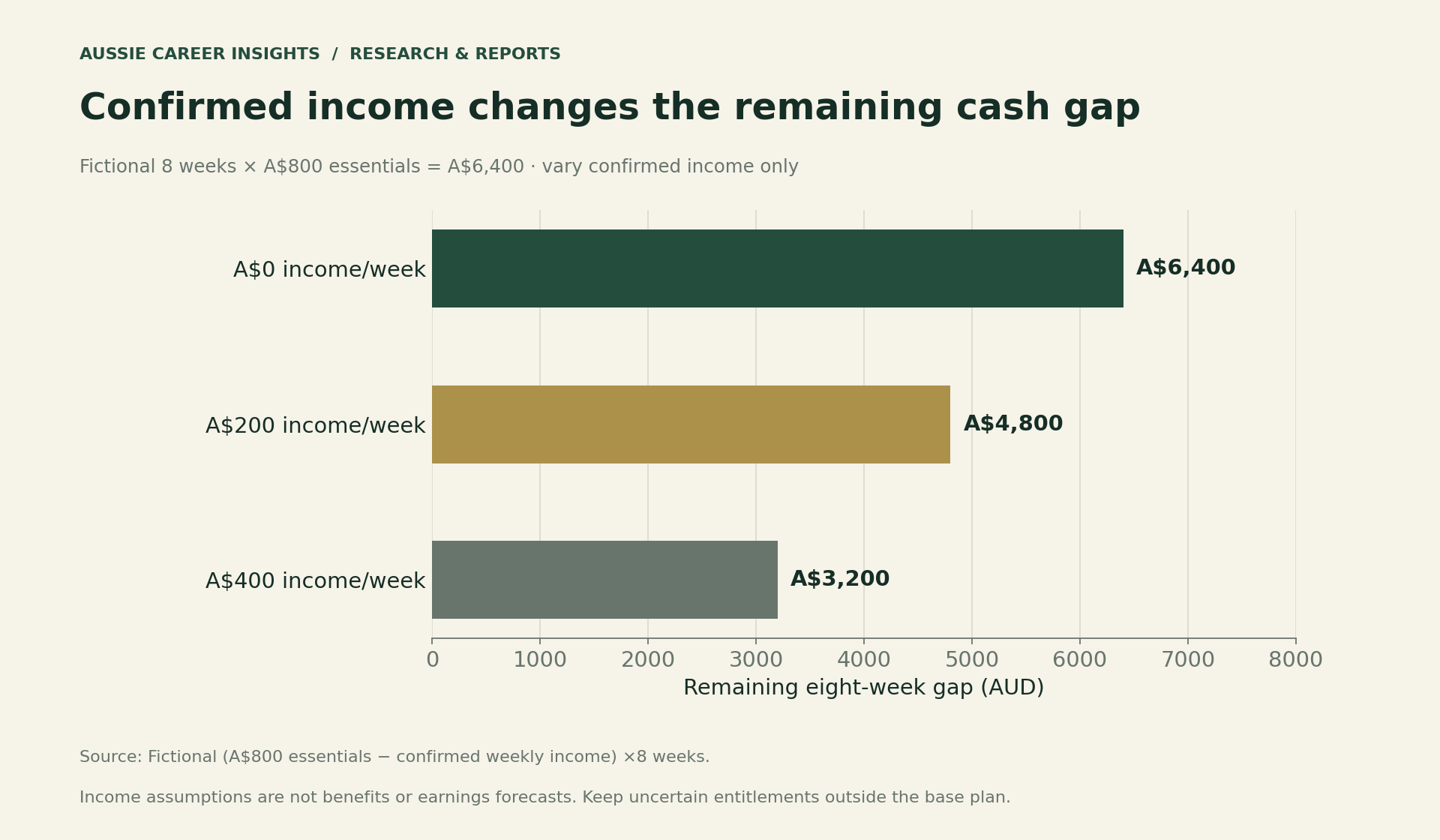
Count money only when its amount and timing are sufficiently confirmed for the purpose of your plan. Keep uncertain entitlements and possible assistance in a separate scenario rather than using them to fill an immediate cash gap.
The department states an average processing aim of 14 weeks after receiving an effective claim, with delays possible. That is not a payment guarantee, and the clock does not simply start when administrators are appointed. Our four-, eight- and twelve-week scenarios are not based on that aim.
Free official help and next checks
For a pay or employment question, use Fair Work’s pay guidance, your union or a qualified employment adviser. For insolvency-specific claims and records, contact the relevant practitioner through independently verified official details.
The FEG claimant guidance lists its hotline, application requirements and support options. Its deadline is an effective claim within 12 months of the later of employment ending or the employer entering liquidation or bankruptcy. Check how the rule applies rather than waiting until that deadline approaches.
Unpaid superannuation follows a separate route: start with the ATO’s unpaid super guidance. If your household needs immediate help, check Services Australia for current support and individual eligibility. No payment is assumed here.
Download a private evidence and planning pack
Download the source-linked FEG limits register (CSV) and all fictional chart calculations (CSV). Published scheme rules and invented household assumptions are labelled separately.
Use the blank owed-received-potentially-covered worksheet (CSV) and the blank household cash worksheet (CSV). These are local planning files. Do not share completed copies containing personal employment or banking information publicly.
If you later compare a new offer, our wage-review benchmark guide explains why annual base, hours and superannuation should stay separate. A job-market comparison does not resolve an existing entitlement claim.
Methodology and dated update log
We checked public appointment metadata, ASIC employee guidance and DEWR scheme pages on 6 November 2026. We did not access restricted creditor documents or infer private payroll information. The appointment is the news hook; FEG limits are existing background rules, not changes announced for this employer.
Figures 1–3 illustrate published caps without deciding eligibility. Figures 4–5 use fictional expenses and income. Costs equal weekly essentials multiplied by duration; the cash gap subtracts confirmed-income assumptions from those costs. No staff survey, loss estimate, redundancy count or payment-date forecast is claimed.
Update log: 6 November 2026 — initial official-source check. Recheck the public appointment status, employee communications and current scheme guidance before acting on later developments. This general guide cannot determine an individual employee’s rights or assistance.


