






The CSIRO fitter machinist apprenticeship in Hobart offers a way to learn a trade while contributing to scientific equipment. Before deciding whether it fits, separate three questions: can you meet the entry requirements, can you sustain the training commitment, and can you show truthful evidence of practical interest?
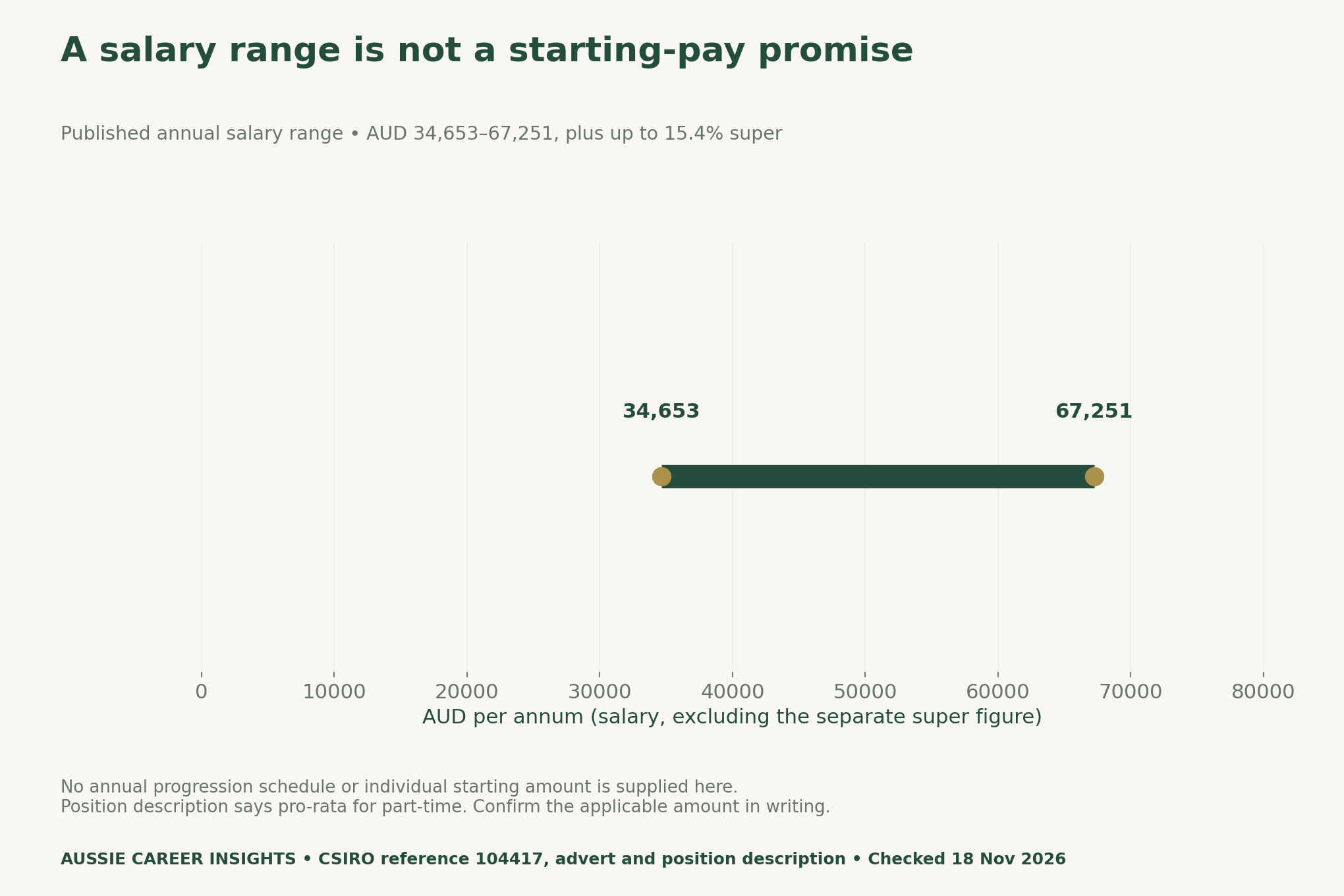
CSIRO’s advertisement dated 16 November 2026 lists a four-year term, block-release TAFE study and an annual salary range of A$34,653–A$67,251 plus up to 15.4% superannuation. We also downloaded the attached position description, reference 104417. It adds details that matter when planning an application and a possible move.
CSIRO fitter machinist apprenticeship: read both documents
The role supports the manufacture of specialised equipment for marine, environmental and atmospheric research. The documents describe learning under experienced technical staff and working towards Certificate III in Engineering, with an option to progress further. This is supervised training, not an expectation that an applicant already performs every listed workshop activity independently.
The position description specifies Year 12 education sufficient for vocational course entry, including English, Maths and Science passes. Australian citizenship is required. Check your actual records against the current documents and ask the listed contact about an uncertain qualification. Do not infer eligibility from a similar apprenticeship elsewhere.
The position description also says relocation assistance will be provided to the successful candidate if required. That resolves an uncertainty in the original research brief. However, it does not set out every covered expense, approval step or payment date. Ask for those terms before committing money to a move.
Plan the commitment before estimating affordability
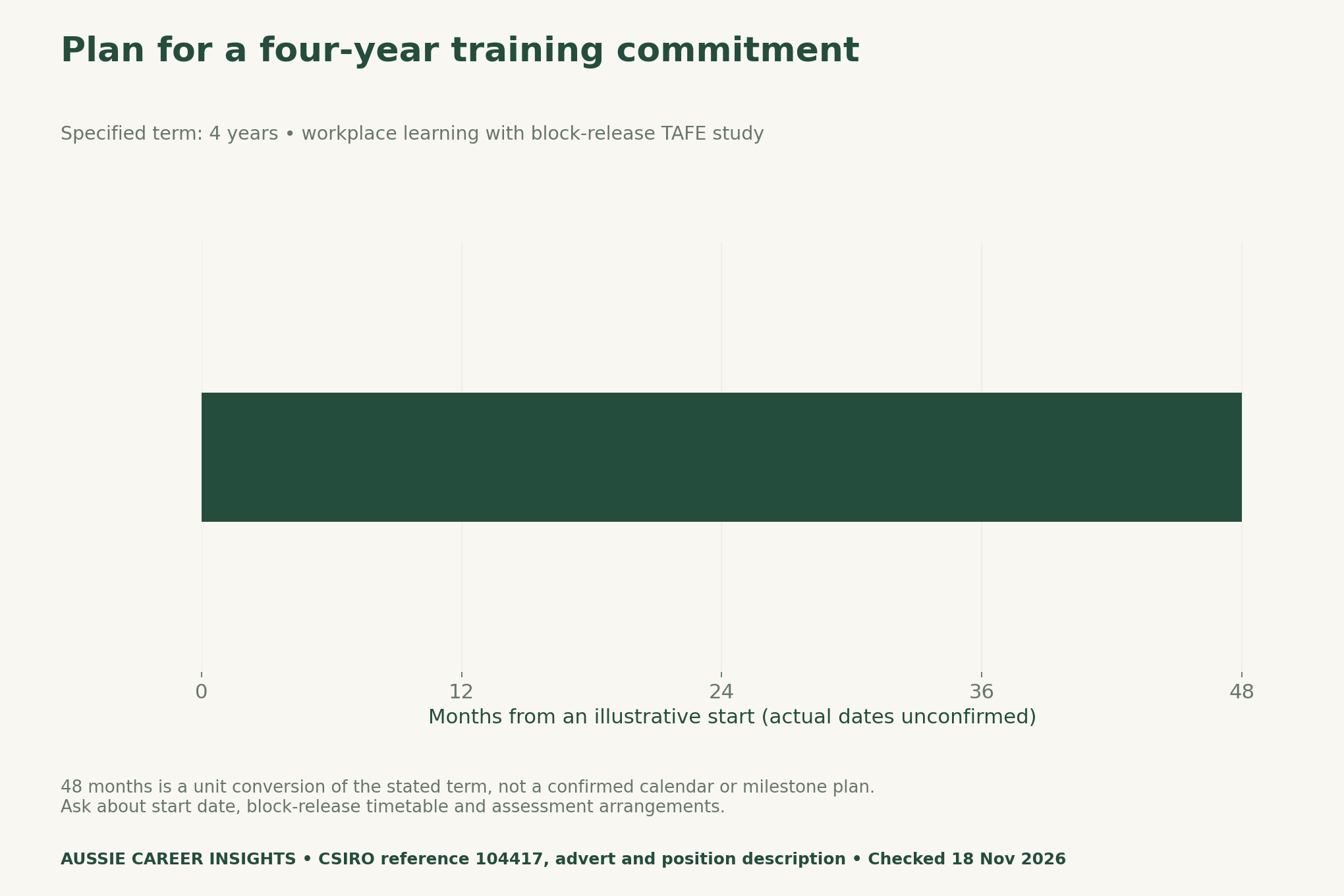
First, identify which dates and arrangements are confirmed. A four-year term does not supply a timetable for travel, assessments or study blocks. Consider how attendance may interact with existing responsibilities. Record unanswered questions so an attractive headline does not substitute for a workable routine.
Next, keep gross salary, superannuation and spendable cash separate. The top of an advertised range is not a safe assumption for a personal budget. Use the applicable written offer when available, an appropriate estimate of deductions, and actual housing or transport quotes. Leave unknown amounts blank rather than inventing a market average.
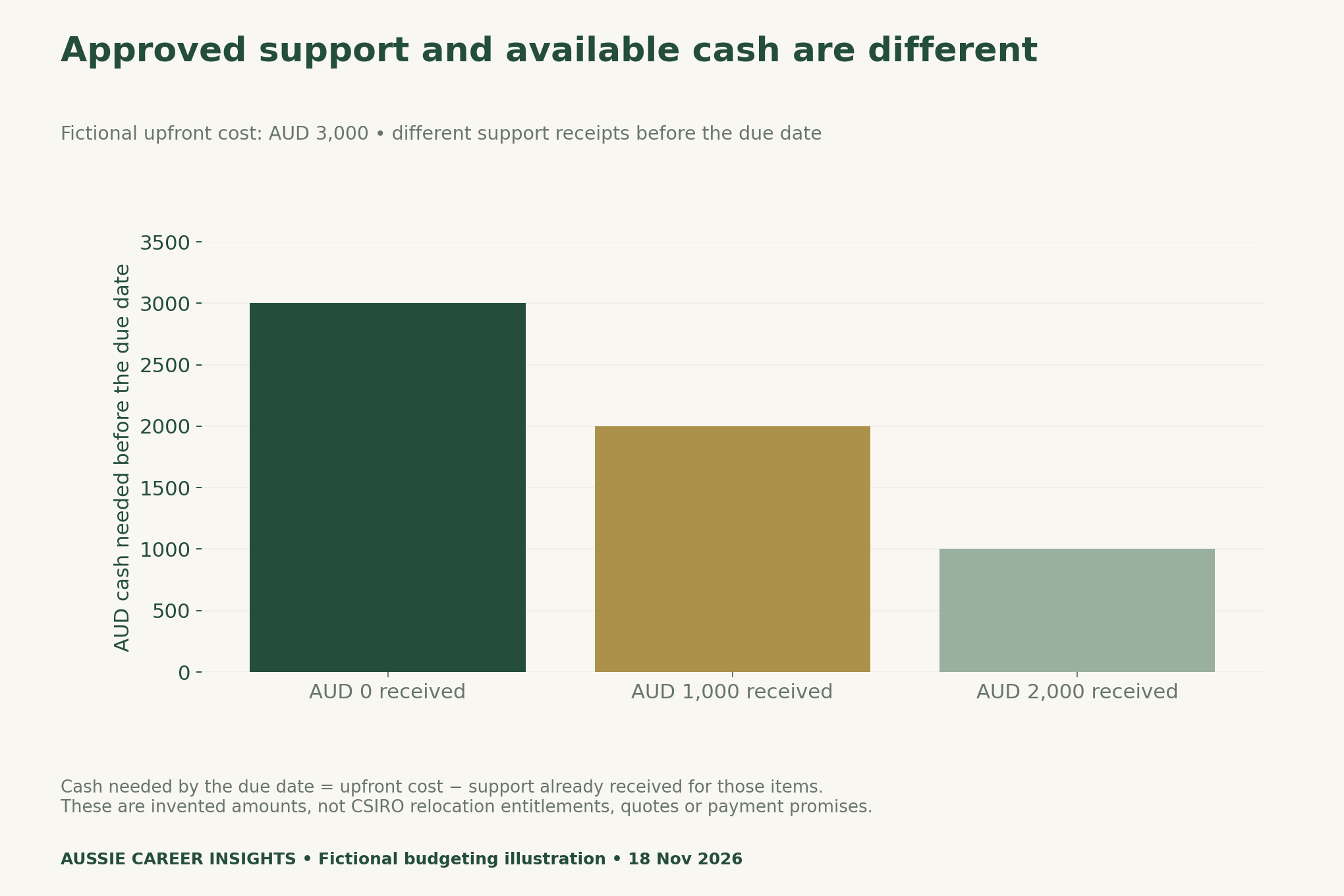
Also distinguish approved support from support already received. If a cost is reimbursed later, it may still require cash first. Our fictional chart changes only the amount received before the due date. It makes no assumption about the employer’s actual reimbursement process. Confirm whether an item is paid directly, advanced or reimbursed.
Build evidence from a project you actually completed
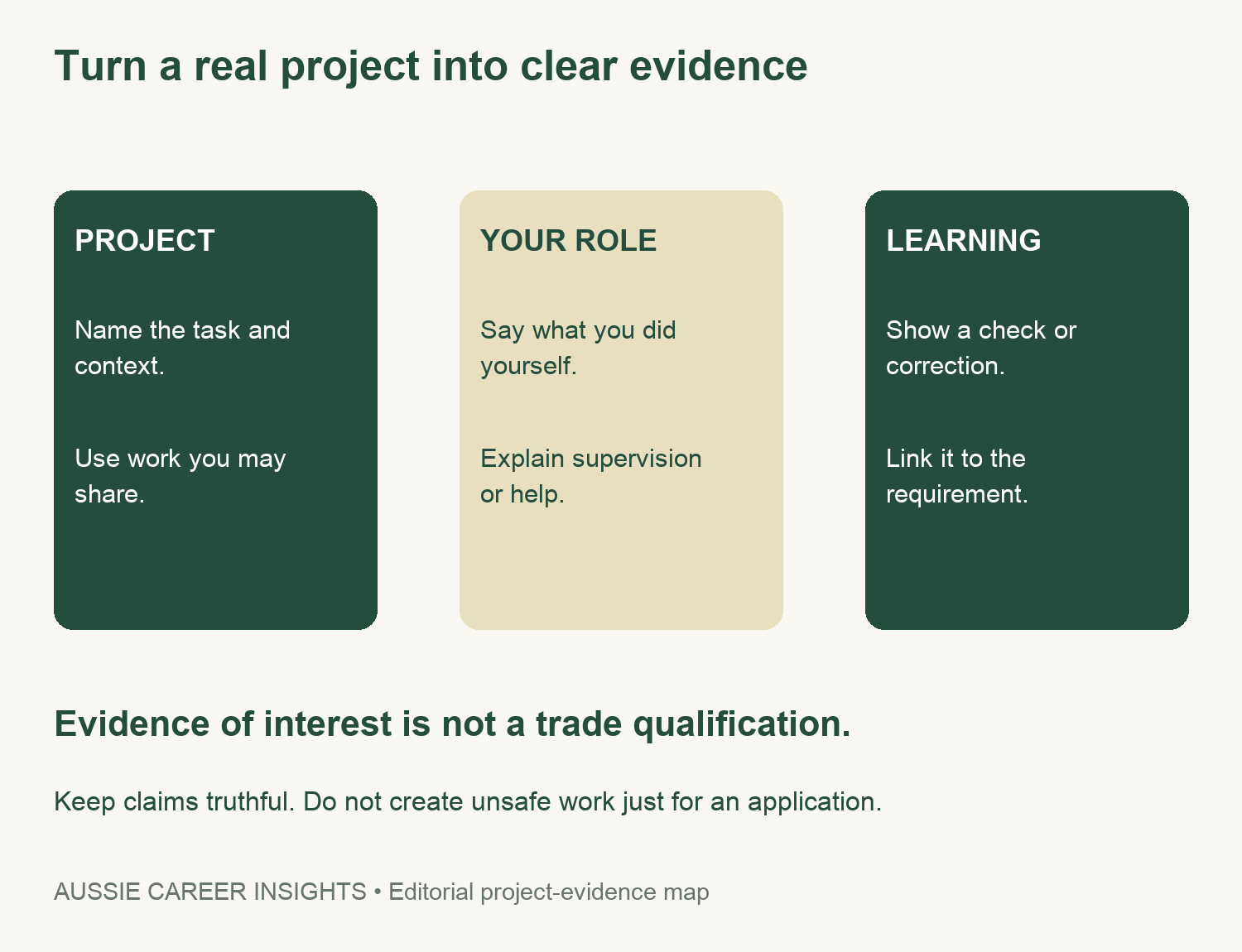
A school project, supervised workshop exercise or permitted home project can provide useful material. Choose something you can explain clearly. Describe the aim, your own contribution, the help you received and one check or correction. Ask permission before sharing photographs of another person’s work or equipment.
For example, a truthful account might explain that you compared a finished piece with a teacher’s specification, noticed a mismatch and asked how to correct it. Use only an event that happened. Do not copy this as a fabricated achievement or present a supervised task as independent professional work.
Then connect the example to a requirement such as attention to detail, teamwork or asking clear questions. One strong example can support more than one discussion, but avoid treating repeated descriptions as separate achievements. Acknowledge gaps and explain what you want to learn rather than overstating experience.
Do not operate machinery, improvise a hazardous demonstration or repeat an unsafe process to create application content. This article gives no machining instructions. Appropriate supervision, approved procedures and the setting’s safety rules remain essential. Existing evidence is more useful than a staged demonstration that creates risk.
Keep application claims and deadlines precise
The current advert lists a closing time of 29 November 2026 at 11 p.m. AEDT and allows earlier withdrawal. Recheck it before relying on the deadline. It asks for a CV and a cover letter of no more than two pages, with selection responses attached as one document. Follow the current employer instructions.
The blank planner supports a private draft; it does not submit an application, assess a person’s suitability or promise an appointment. Keep education records and identity documents in the employer’s approved process. Use a neutral reference in our worksheet, and avoid storing sensitive identifiers there.
For another measurement-focused research example, see our water-data portfolio guide. Its subject differs, but the useful habit is the same: explain the source, the work you performed and the limits of what the evidence shows.
Your Personalized Career Strategy
Unlock your potential with tailored career consulting. Get clear, actionable steps designed for your success. Start now!
Get StartedMethod and four reusable CSV tools
We checked the advert and downloaded position description on 18 November 2026. The first two charts show the stated salary interval and a unit conversion of the term. The third uses fictional amounts solely to explain cash timing. We found no individual starting rate or annual pay progression schedule in these sources.
- Advert and position-description fact register (CSV)
- Blank truthful project-evidence planner (CSV)
- Blank pay, transport and relocation budget (CSV)
- Fictional relocation cash-timing calculations (CSV)
Suggested citation: Aussie Career Insights, “CSIRO’s Hobart Apprenticeship: Evidence for a Scientific Workshop Career”, 18 November 2026. Sources: CSIRO advert and position description 104417. Original charts and private planning tools by this publication. Vacancy details may change; the employer’s current listing governs.


