



Historical and Contemporary Contributions
In Australia, artists shape cultural identity through visual practices.
Visual art contributes to a shared sense of place and identity.
Ongoing artistic practice will continue to shape cultural conversations.
Historical Perspectives
Artists have recorded social change through visual work.
Furthermore, they have preserved collective memory through imagery.
Moreover, creative practices have reflected community values and tensions.
Contemporary Practices
Contemporary artists expand methods across diverse visual forms.
Additionally, they engage audiences through public projects and exhibitions.
Moreover, they adapt to new technologies and platforms.
Mechanisms of Influence
- Representation foregrounds different perspectives and lived experiences.
- Public commissions place art within everyday spaces.
- Education programs connect artists with communities and learners.
Shaping Cultural Identity and Public Narratives
Consequently, artworks can prompt public conversations about social values.
Furthermore, artists often reframe historical and contemporary stories.
Therefore, visual interventions influence how communities remember and relate.
Audience Engagement and Dialogue
Artists create spaces for dialogue and emotional exchange.
Moreover, exhibitions and public works invite interpretation and debate.
In addition, participatory projects encourage active audience contribution.
Your Personalized Career Strategy
Unlock your potential with tailored career consulting. Get clear, actionable steps designed for your success. Start now!
Get StartedSustaining Cultural Memory
Art practices preserve memories beyond official records.
Additionally, they archive community narratives in visual form.
Therefore, they support intergenerational transmission of cultural knowledge.
Challenges and Opportunities
Artists navigate changing social expectations and institutional frameworks.
However, they also find new opportunities for visibility and impact.
Moreover, collaborative approaches can broaden reach and relevance.
Paths Forward
Artists shape public narratives through distinct mechanisms.
Collaborations amplify diverse voices and interdisciplinary approaches.
Additionally, sustained engagement can deepen public understanding of identity.
Career Pathways and Professional Development
Artists pursue multiple pathways to develop professional careers.
Galleries, residencies, education, and networks support sustained practice and visibility.
Artists document work and prepare professional materials for opportunities.
Galleries and Exhibition Strategies
Galleries provide platforms for artists to present and sell their work.
Additionally, exhibitions help artists reach diverse audiences and critics.
Stand Out with a Resume That Gets Results
Your career is worth more than a generic template. Let us craft a resume and cover letter that showcase your unique strengths and help you secure that dream job.
Get HiredArtists prepare clear portfolios and professional documentation for gallery approaches.
Furthermore, alternative exhibition formats can expand visibility beyond traditional venues.
- Group exhibitions allow artists to connect with peers and new viewers.
- Solo exhibitions showcase sustained inquiry and individual artistic development.
- Pop up and site specific shows create flexible opportunities for presentation.
- Online exhibitions extend reach and provide accessible viewing options.
- Curated projects can situate work within thematic conversations and networks.
Residencies and Studio Opportunities
Residencies offer focused time and dedicated studio space for practice.
They often provide critical feedback and professional networking opportunities.
Artists benefit from uninterrupted development and access to new resources.
Additionally, short term studio placements can seed new projects and collaborations.
- Residency experiences support experimentation without immediate market pressures.
- Shared studio environments foster peer learning and resource sharing.
- Studio access supports consistent production and professional habits.
Education and Mentorship Pathways
Formal education builds technical skills and theoretical understanding.
Additionally, short courses and workshops deliver targeted practical training.
Mentorship provides tailored guidance and career advice from experienced practitioners.
Peer critique groups support ongoing refinement and peer to peer learning.
- One on one mentorship can clarify goals and refine artistic direction.
- Group mentorship creates collective support and shared learning opportunities.
- Teaching roles enable artists to develop communication and leadership skills.
Building Professional Skills and Visibility
Artists develop skills in documentation, pricing, and contract management.
Furthermore, artists learn to prepare applications for exhibitions and opportunities.
Marketing and presentation skills help artists communicate work clearly to audiences.
Additionally, ongoing professional development keeps practice relevant and adaptive.
Transform Your LinkedIn for Maximum Impact
Elevate your professional brand with a LinkedIn profile that attracts recruiters, showcases your expertise, and maximizes opportunities. Stand out in your industry with a profile built for success.
Boost Profile- Portfolio reviews and feedback sessions sharpen presentation strategies.
- Workshops in grant and proposal writing strengthen funding prospects.
- Public talks and artist statements deepen audience understanding of the work.
Networks, Communities, and Public Engagement
Artists cultivate networks through collaborations and participation in community projects.
They engage audiences through public programs and educational initiatives.
Online platforms can complement in person networks and broaden reach.
Consequently, active engagement supports long term visibility and career resilience.
- Collaborative projects create shared platforms and cross disciplinary exchange.
- Artist run initiatives build grassroots support and local visibility.
- Volunteering and participating in events strengthen professional relationships.
Indigenous and Cross-Cultural Practices
Indigenous and cross-cultural practices guide artistic decision making.
They embed community knowledge and cultural protocols into creative work.
Artists assert cultural authority and storytelling responsibility.
Cultural Protocols and Creative Practices
Collaboration often respects elders and knowledge holders guidance.
Artists prioritize respect for cultural ownership.
Projects emphasize informed consent and shared decision making.
- Artists prioritize respect for cultural ownership
- Projects emphasize informed consent and shared decision making
- Practices protect community knowledge and cultural integrity
- Work seeks to balance visibility with cultural safety
Influence on National Arts Discourse
These practices influence national arts discourse in profound ways.
They broaden the themes and languages used in public conversations.
Consequently, institutions negotiate new frameworks for representation and engagement.
Critical dialogues question conventional canons and curatorial norms.
Recognition and Representation
Recognition emerges through sustained visibility and community endorsement.
Representation requires meaningful decision making power for cultural custodians.
Institutions often adapt policies to reflect diverse cultural expectations.
Community-Led Recognition Models
Communities often develop their own models for recognition and governance.
These models emphasize reciprocity, accountability, and cultural safety.
They prioritize local priorities and collective stewardship of cultural expression.
Collaborations and Cross-Cultural Exchange
Cross-cultural collaborations enable co-creation and shared authorship.
They foster dialogue and mutual learning between diverse artistic communities.
Partners commit to long term relationships and mutual accountability.
- Artists prioritize informed consent and ongoing communication
- Projects support equitable resource sharing and access
- Collaborations center cultural knowledge holders in leadership roles
- Partners commit to long term relationships and mutual accountability
Public Practice and Community Engagement
Artists work in public places with varied intentions and methods.
Furthermore, they draw on site conditions and community needs.
Additionally, approaches range from temporary interventions to longer-term installations.
Moreover, some projects emphasize place, while others emphasize people.
Designing for Place
Artists assess physical characteristics and social context of sites.
Consequently, they adapt scale, material and interaction strategies to sites.
Moreover, they consider sightlines, accessibility and everyday movements.
Therefore, site responsiveness guides decisions about visibility and durability.
Processes of Community Collaboration
Artists initiate dialogue with local people and stakeholders.
Then, they gather input to shape ideas and priorities.
Next, they co-develop concepts with participants and partners.
Finally, they implement projects with community roles clearly defined.
- Listening sessions create mutual understanding and project relevance.
- Workshops enable hands-on contribution and skills sharing.
- Open events invite participation and sustain momentum.
Transforming Public Space
Art activates underused spaces and encourages new forms of use.
Moreover, installations can reframe everyday routes and gathering places.
Consequently, people discover alternative meanings in familiar environments.
Therefore, projects can generate visible local identity and pride.
Building Local Cultural Participation
Artists create entry points for diverse community involvement.
Furthermore, they design roles that suit different ages and abilities.
Additionally, public practice often encourages repeat engagement and ownership.
Briefly, this practice complements historical and cross-cultural contributions.
Practical and Ethical Considerations
Artists negotiate permissions, safety and long-term care responsibilities.
Moreover, they clarify maintenance and stewardship before installation.
Therefore, transparent communication supports trust and project longevity.
Measuring Impact and Learning
Artists document processes and reflect on community feedback.
Additionally, they use learning to inform future work and partnerships.
Consequently, reflective practice strengthens relationships and project quality.
Gain More Insights: The Role of Art Directors in Leading Creative Projects
Market Strategies and Income Diversification
Artists pursue varied market strategies to sustain creative work.
They combine multiple income sources to balance risk and opportunity.
This approach supports long term practice and financial resilience.
Building Sustainable Income Streams
Artists benefit from multiple revenue sources.
They identify income types that match their practice and goals.
Additionally, they evaluate each stream for consistency and long term fit.
Furthermore, they phase in new income channels gradually to manage workload.
- Sales of original artworks provide direct income and market validation.
- Commissions deliver tailored work for specific clients or projects.
- Licensing and reproduction generate passive revenue from rights usage.
- Workshops, teaching, and speaking engagements offer fee based income.
- Commercial collaborations and product work translate practice into new markets.
- Merchandise and limited editions diversify offerings and price points.
Navigating Galleries and Collectors
Galleries represent one important market channel.
Artists build clear professional relationships with gallerists and collectors.
They prepare concise presentation materials that communicate their practice clearly.
Moreover, they discuss gallery terms and expectations before formal agreements.
- Discuss pricing approaches and how retail prices relate to artist payments.
- Clarify consignment duration and exhibition timelines in writing.
- Agree on promotional responsibilities and inventory management plans.
- Confirm shipping, insurance, and condition reporting procedures upfront.
Managing Commissions and Client Relationships
Artists define project scope and deliverables before starting commissioned work.
They use written agreements to set expectations and timelines.
Next, they establish payment schedules with deposits and final balances.
Furthermore, they outline revision limits and approval milestones clearly.
They communicate regularly to avoid misunderstandings during production.
Finally, they confirm final delivery terms including shipping or installation details.
Exploring Commercial Opportunities
Artists adapt work for commercial briefs while protecting artistic integrity.
First, they assess whether a commercial partner aligns with their values.
They negotiate usage rights and fees for reproduced or applied artwork.
Moreover, they outline exclusivity, duration, and geographic scope in agreements.
Additionally, they consider scalability when creating products or reproducible works.
They develop concise proposals that explain commercial benefits and outcomes.
Financial and Administrative Practices
Artists track income and expenses to understand cash flow clearly.
They issue professional invoices and retain transaction records consistently.
Next, they budget for material costs, studio expenses, and project timelines.
Additionally, they set aside reserves for slower market periods and unexpected costs.
They maintain clear contracts and documentation for all commercial agreements.
Finally, they seek professional advice when complex financial or legal questions arise.
Delve into the Subject: The Life of a Costume Designer: Behind the Scenes of Australian Productions
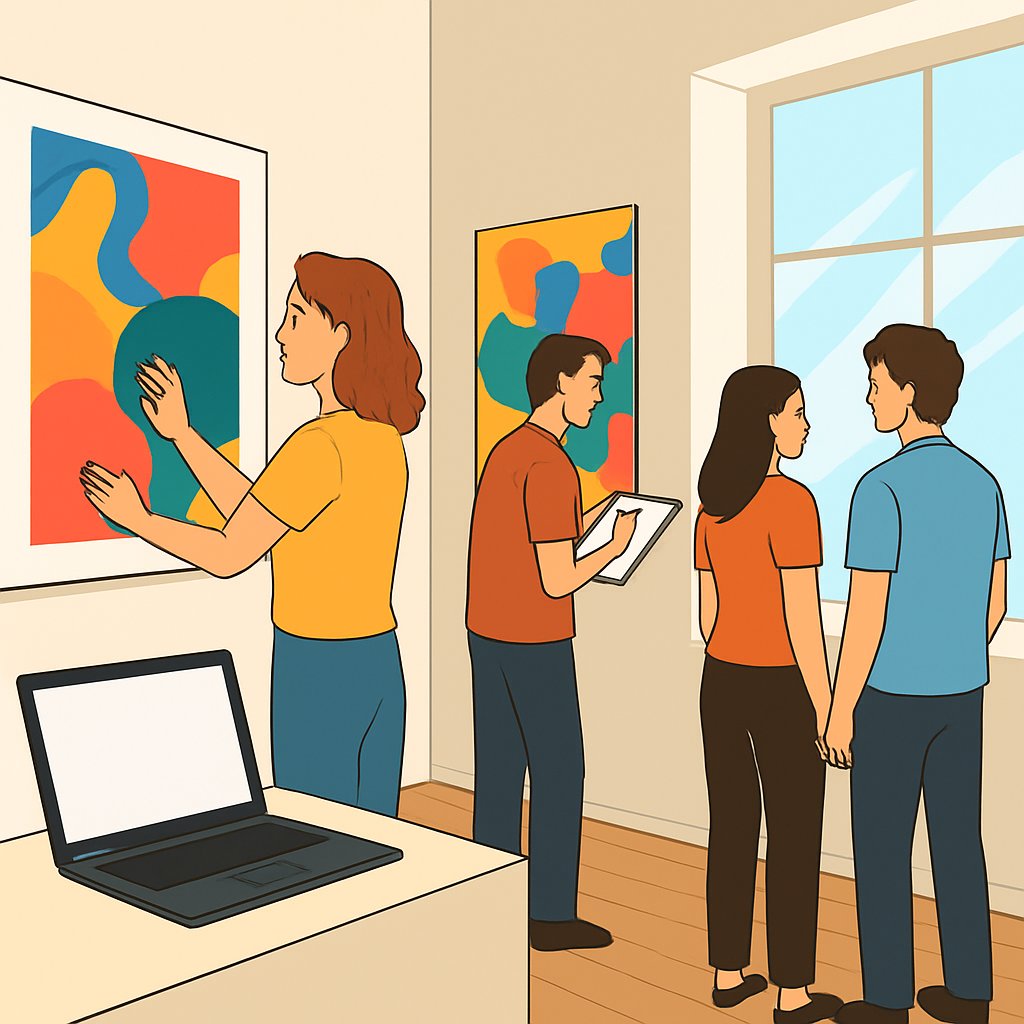
Digital and New-Media Practices
This section addresses digital and new-media practices for visual artists.
It outlines presentation, engagement, collaboration, archiving, experimentation, and ethics.
Readers will find focused guidance on online methods and sustainable workflows.
Strategic Online Presentation
Visual artists use online channels to extend reach beyond physical venues.
Artists create focused digital presentations that highlight work and process.
Additionally, artists tailor imagery for varied screen formats and resolutions.
They ensure image clarity and provide concise contextual text for viewers.
Moreover, artists maintain consistent visual language and branding across touchpoints.
Audience Engagement and Community Building
Artists craft regular updates to sustain audience interest over time.
They invite dialogue through comments, responses, and interactive prompts.
Artists host live and asynchronous events to deepen viewer relationships.
Consequently, communities form that support artistic exchange and feedback.
Experimentation with New-Media Forms
Artists explore digital techniques to create dynamic time-based and interactive work.
They combine image, sound, and responsive elements for layered experiences.
Experimentation encourages risk-taking and invites novel audience encounters online.
Collaboration and Networked Practice
Artists connect with peers to form cross-disciplinary online collaborations.
They leverage remote collaboration to expand creative possibilities and methods.
Networked projects invite shared authorship and distributed practices among participants.
Documentation, Archiving and Sustainability
Artists document digital projects for future access and continued presentation.
They develop organized archives to preserve work and process over time.
Therefore, they plan formats that support longevity and platform-agnostic access.
Ethics, Access and Rights in Digital Contexts
Artists consider accessibility to ensure inclusive participation and engagement online.
They attend to authorship clarity and respectful cultural representation in digital work.
They assess privacy and consent when documenting people and events digitally.
Delve into the Subject: The Role of Scriptwriters in Bringing Australian Stories to Life
Funding, Policy and Institutional Support
Public grants support projects and programs for artists.
Policy shapes long-term security for artists within cultural ecosystems.
Capacity building strengthens artists’ ability to manage careers and projects.
Types of Funding and Support
Additionally, private and philanthropic donations sustain longer initiatives.
Institutional funding enables operational stability for artist-run organisations.
Moreover, project-specific grants fund time-limited artistic work.
Accessing Grants and Application Strategies
Artists prepare clear project descriptions when applying for support.
Consequently, they highlight public benefit and artistic outcomes.
Furthermore, they develop realistic budgets and timelines for proposals.
Moreover, artists seek feedback on draft applications from peers or organisations.
- Research eligibility and priorities for each funding opportunity.
- Tailor applications to each funder’s stated goals and values.
- Maintain a portfolio that demonstrates professional practice and impact.
- Document outcomes and evaluation plans for funded projects.
Role of Arts Organisations and Institutions
Arts organisations provide programmatic and administrative support to artists.
They also offer access to networks and collaborative opportunities.
Institutions develop audience engagement and professional development programs.
Furthermore, they contribute to cultural infrastructure and long-term project planning.
Policy and Advocacy for Sustainable Careers
Consequently, advocacy groups work to influence policy and funding priorities.
Artists can participate in collective advocacy to promote fair working conditions.
Moreover, collaborative campaigns highlight the economic and social value of art practice.
Building Institutional Partnerships
Artists form partnerships to share resources and platforms with institutions.
Therefore, they negotiate clear agreements that outline responsibilities and rights.
Additionally, partnerships can include joint programming and capacity building activities.
Sustaining Careers Through Advocacy and Support
Financial and legal advice supports longer-term stability for creative practices.
Advocacy for policy change complements individual capacity building efforts.
Ultimately, coordinated institutional and policy support sustains artistic careers over time.
Interdisciplinary Collaboration and Cultural Partnerships
Artists collaborate across film, fashion, design, education, and community sectors.
These partnerships blend methods and perspectives to produce hybrid creative outcomes.
Additionally, such collaborations expand resources and widen audience reach.
Overview of Cross-Sector Work
Artists engage with multiple sectors to explore new creative contexts.
For example, collaborations connect artistic practice to technical production and audience development.
Consequently, projects often generate hybrid forms and shared methodologies.
Shared Goals and Values
Collaborators establish shared goals at a project start.
Partners agree on values, audience aims, and creative priorities.
Then teams document expectations to guide later decisions.
Communication and Language
Teams create a common language to bridge disciplinary jargon.
Regular check ins maintain alignment and surface misunderstandings early.
Moreover, teams use frequent updates to keep momentum and clarity.
Roles, Rights, and Recognition
Projects clarify roles, responsibilities, and authorship before work begins.
Partners record rights and credit arrangements in writing for transparency.
This practice prevents disputes and supports fair recognition.
Project Models and Workflow
Projects can follow iterative, research led, or production focused workflows.
Flexible timelines accommodate different creative practices and technical needs.
Teams adapt milestones to reflect learning and changing constraints.
Ethical and Community Centred Practices
Artists prioritize respectful engagement when collaborating with communities.
Projects embed consent, cultural safety, and mutual benefit practices.
Moreover, teams uphold protocols to protect shared cultural knowledge.
Capacity Building and Skills Exchange
Partners share skills through workshops, mentorship, and co learning sessions.
This exchange builds transferable skills across creative and professional contexts.
Consequently, collaborations strengthen long term capacity for all partners.
Practical Steps to Start a Partnership
Begin by initiating conversations to learn partner priorities and constraints.
Next, draft a simple memorandum outlining scope, timelines, and responsibilities.
Also set milestones and review points to evaluate progress and adjust plans.
- Initiate conversations to understand each partner’s priorities and constraints.
- Draft a simple memorandum that outlines scope, timelines, and responsibilities.
- Set milestones and review points to evaluate progress and adapt plans.
- Plan for documentation and public sharing of outcomes where appropriate.
Measuring Impact and Legacy
Define impact indicators collaboratively to measure creative and social outcomes.
Partners commit to documenting lessons and reflections publicly.
This practice supports future learning and project legacy.
Sustaining Relationships
Maintain regular contact beyond single projects to build long term trust.
Moreover, revisit agreements periodically to adapt to new opportunities and contexts.
In Australia, artists navigate diverse cultural landscapes when forming partnerships.


