




A hospitality job offer checklist helps you test the details behind a busy hiring market. JSA reports that 66% of Accommodation and Food Services employers were recruiting in the September quarter of 2026, compared with 47% nationally. However, that statistic cannot confirm the hours, training or supervision in your particular offer.
Before accepting, ask why the vacancy exists, which hours the employer will confirm, how rosters work and who supports a new starter. Then record the answers and the written evidence. A useful comparison keeps unresolved details visible rather than turning a confident interview into assumed conditions.
We checked the new JSA release and its underlying report on 30 October 2026. This guide provides five figures and three downloads. It is a vacancy-checking tool, not a shortage ranking, a pay-entitlement calculation or a claim about your chance of being hired.
Read the quarter, not just the news date
JSA published its recruitment update on 29 October. The linked REOS report covers the September quarter of 2026. Although the news text sometimes says September, our figures retain the quarterly reference period. The report’s notes explain that quarterly estimates combine the three months within each quarter.
Here, hospitality is shorthand for the report’s Accommodation and Food Services industry. It should not silently expand into every tourism occupation. We compare the same industry and measure across quarters, and keep national comparisons on the matching quarterly basis.
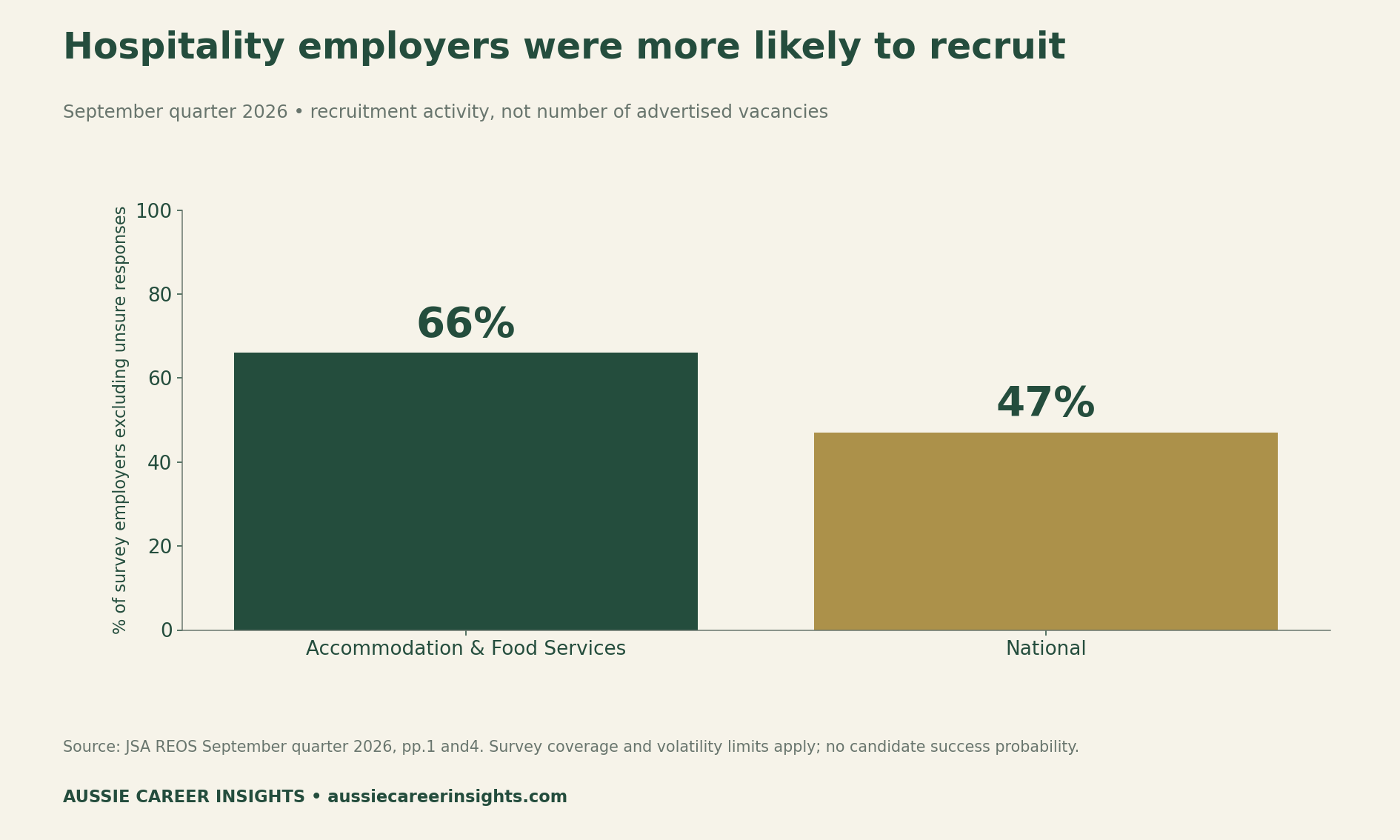
Separate recruitment from staff-growth intentions
An employer can recruit to replace someone, cover a season or expand. Therefore, a recruitment rate does not automatically establish net workforce growth. Ask which reason applies to the vacancy you are considering and whether the role has a defined ongoing purpose.
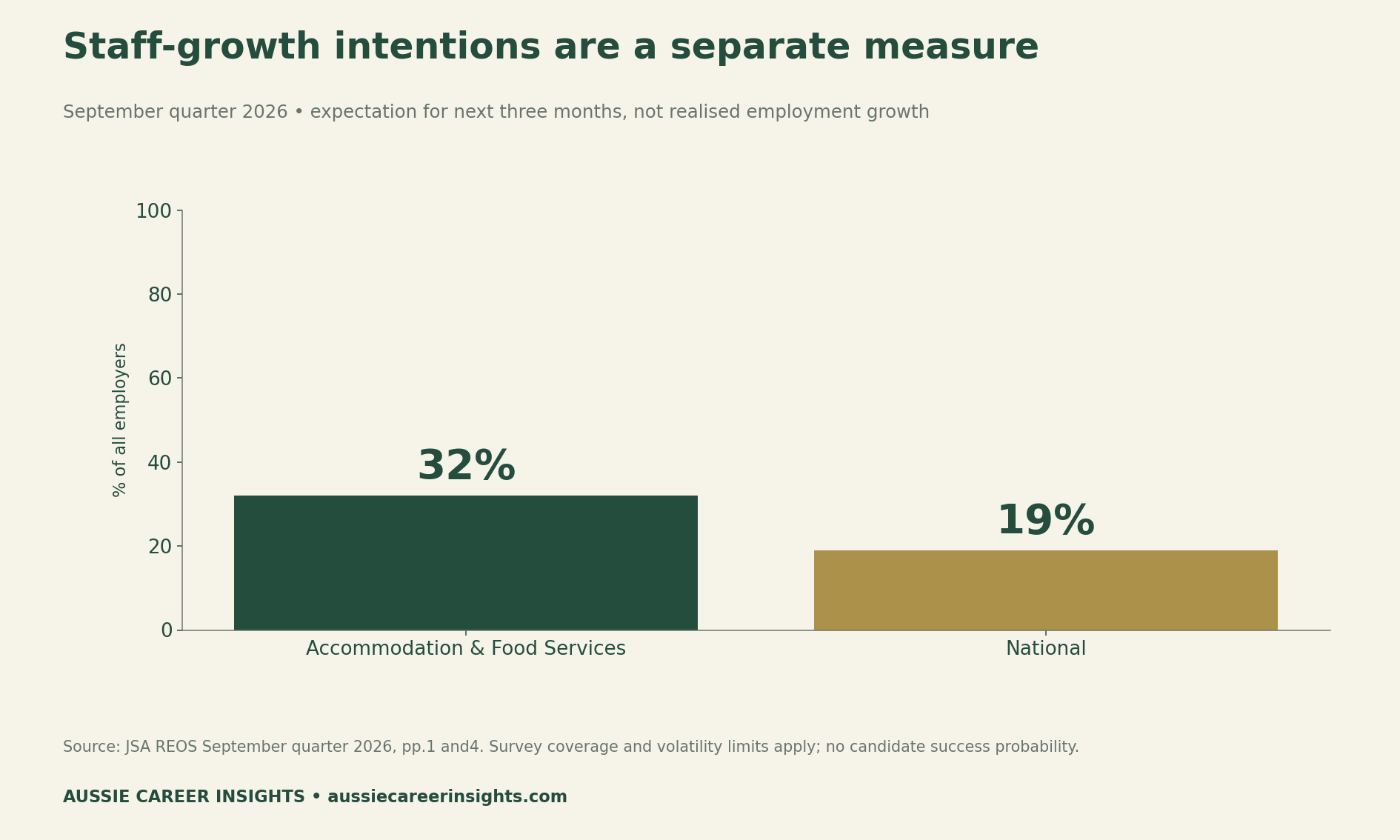
The survey’s forward-looking measure describes expectations for the following three months. It cannot guarantee a particular shift allocation or future promotion. Likewise, an expansion answer during an interview needs practical detail about the role, team and proposed hours.
The hospitality recruitment trend changes over time
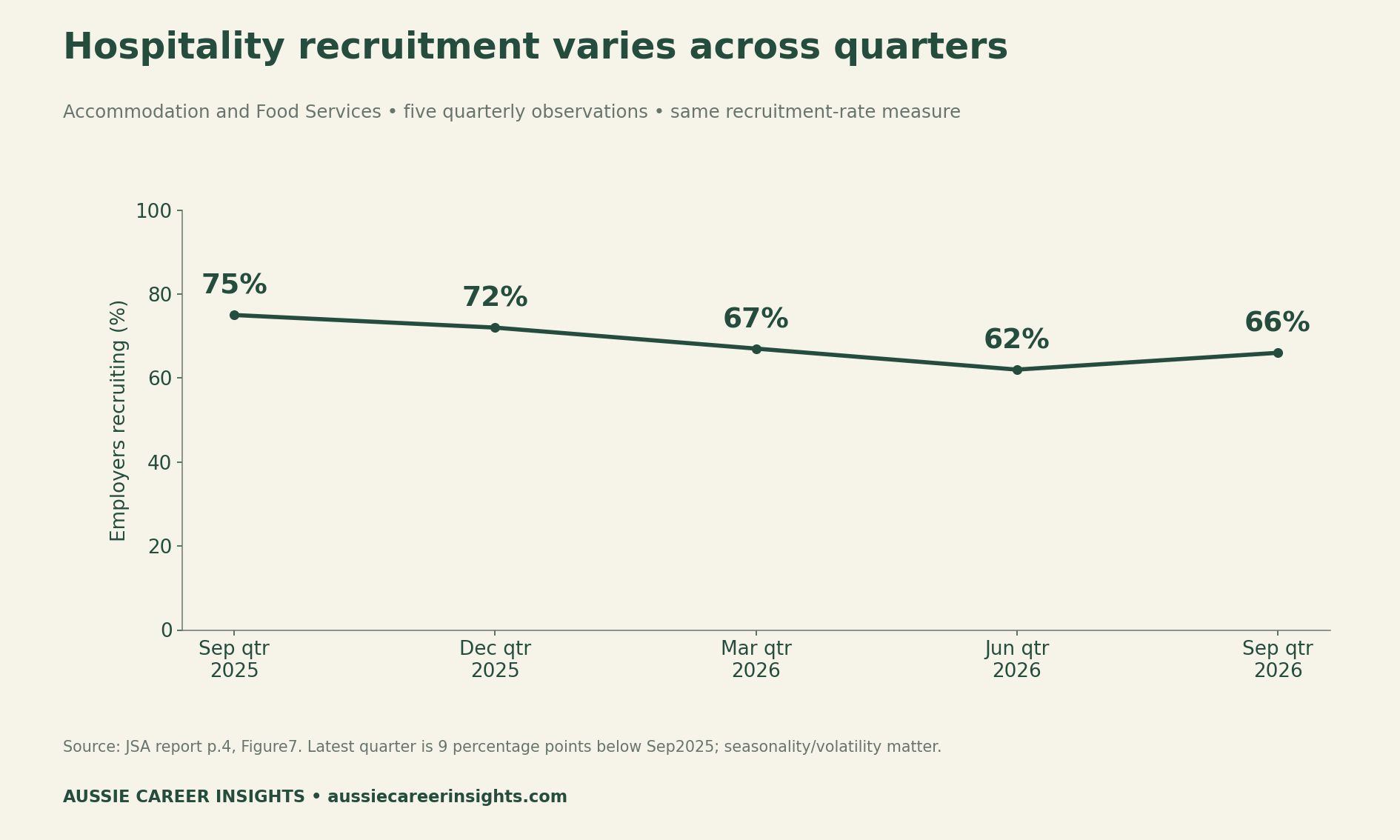
The latest rate is four percentage points above the June quarter and nine points below the September quarter a year earlier. Those comparisons answer different questions. Neither tells us whether an individual employer has stable rosters or why its staff are leaving.
A busy market can create more opportunities to investigate. However, the aggregate trend cannot substitute for checking a written offer. It also cannot establish that repeated recruitment is a warning sign at a named business. No employer-level retention study supports such a conclusion here.
Hiring difficulty uses a different denominator
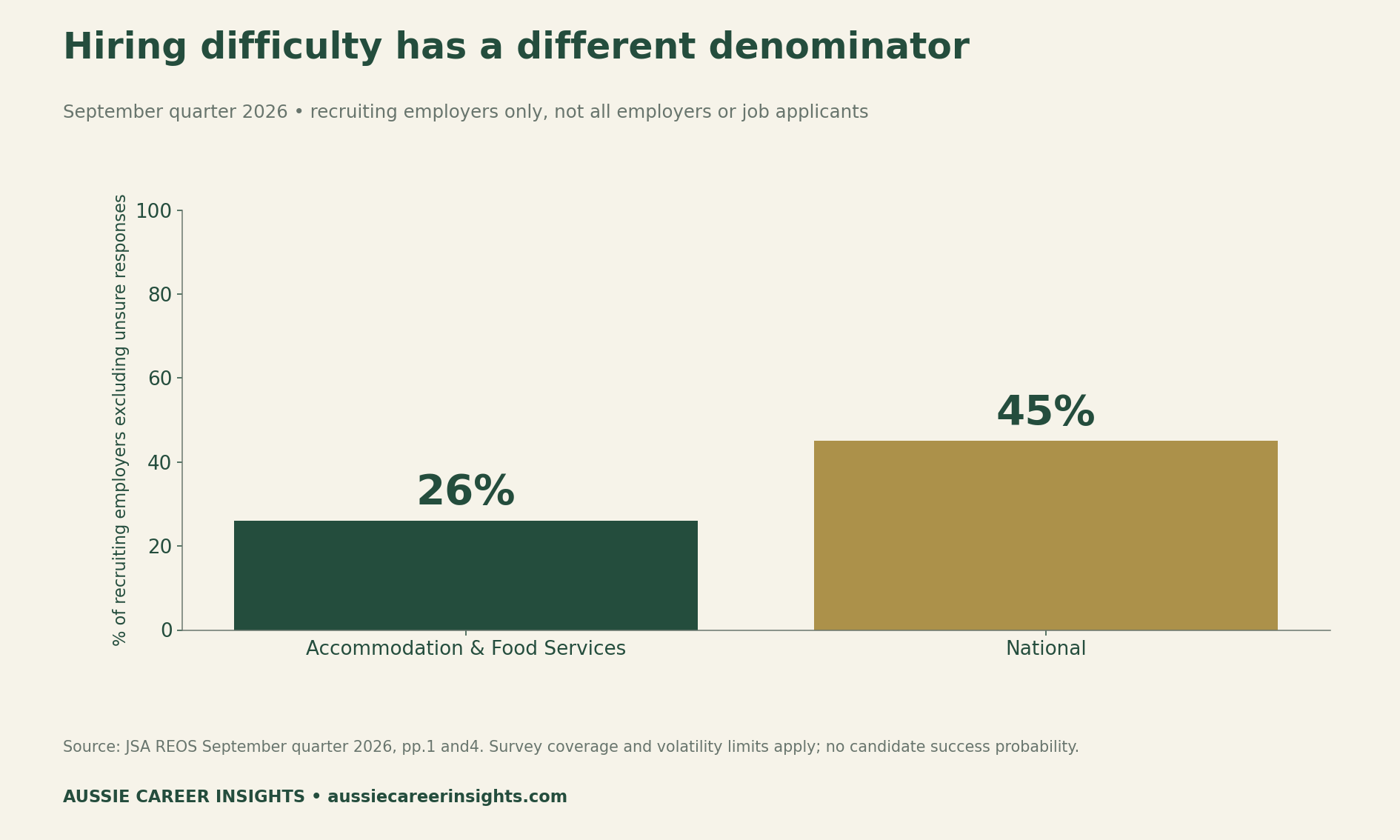
The recruitment rate counts surveyed employers recruiting or recently recruiting, while the difficulty rate concerns the subset that recruited. The expectation measure concerns employers’ plans. Keep these definitions separate when quoting the figures or comparing them with another report.
Use the hospitality job offer checklist before interview
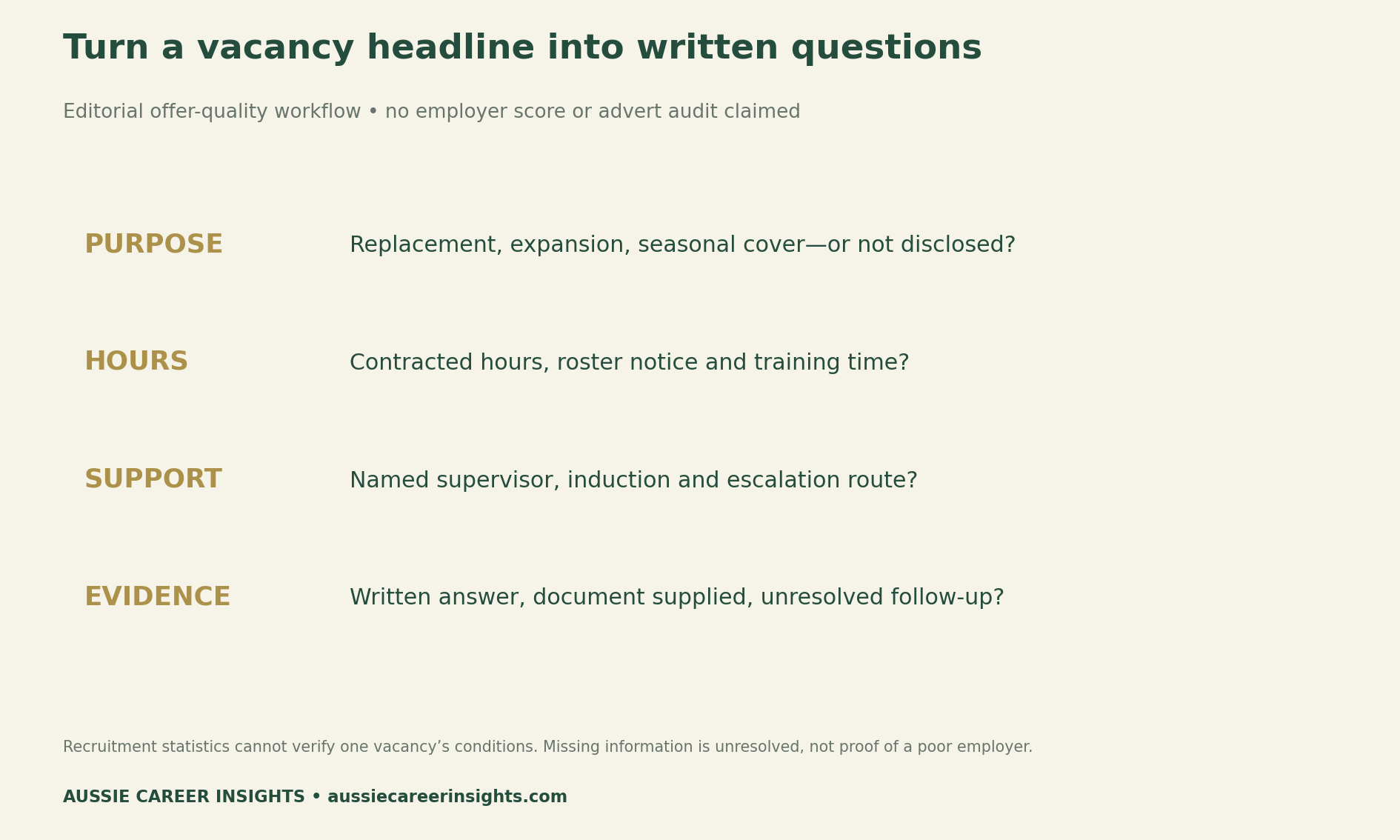
First identify the vacancy’s purpose. Ask whether it replaces a departing worker, supports expansion or covers a defined busy period. If the employer has not decided, record that answer honestly. Not disclosed is different from a confirmed replacement or expansion.
| Topic | Question to ask | Evidence to request |
|---|---|---|
| Hours | Which hours and employment type will the offer confirm? | Written terms and the relevant hours commitment |
| Rosters | How far ahead are rosters issued, and how do changes work? | Example roster process or written policy |
| Training | What induction is scheduled, and how is training time handled? | Induction plan and confirmed arrangements |
| Supervision | Who supports me during an unfamiliar task or shift? | Named supervisor and escalation route |
| Vacancy purpose | Replacement, expansion, seasonal cover or something else? | A clear role explanation, with unknowns retained |
Next, consider your practical constraints. A role may sound attractive yet conflict with transport, caring duties or another commitment. Ask how the actual shift pattern fits those needs. The worksheet records answers; it does not decide which trade-offs you should accept.

Request specific arrangements before accepting
Move from broad assurances to examples. If an employer says training is supportive, ask who provides it, when it takes place and what happens when the supervisor is unavailable. Also, clarify arrangements for evening, weekend or unusually busy shifts when relevant to that role.
Then compare the written terms with the interview answers. Record discrepancies as questions to resolve. Check applicable employment conditions through an appropriate current source or adviser; this checklist does not determine an award, classification or lawful rate for your circumstances.
For team structure, our kitchen hierarchy guide provides role background. Use it to sharpen questions about supervision, while confirming the structure of the actual workplace. It cannot establish that every kitchen uses the same titles or responsibilities.
Your Personalized Career Strategy
Unlock your potential with tailored career consulting. Get clear, actionable steps designed for your success. Start now!
Get StartedDownload the offer comparison and data
Blank hospitality offer comparison (CSV) records employer, role, vacancy purpose, hours, roster notice, training, supervisor, evidence and follow-up questions. It is a plain worksheet, not an automated ranking. Keep completed copies and private employment documents locally.
Quarterly indicator data (CSV) preserves each measure’s population, percentage, denominator and source page. Hospitality recruitment trend (CSV) contains the five observations behind Figure 3. These files reproduce the published survey statistics without inventing vacancy counts.
A later advert-disclosure audit would need a defined sample, collection date and deduplication rule for employer, location and role. It could measure what adverts disclose, with missing information reported explicitly. We have not collected that sample, so no disclosure rate or real-employer comparison appears here.
Method, coverage and limits
We checked JSA’s 29 October release against the original September-quarter report. National comparisons come from page 1; the industry row and quarterly recruitment series come from page 4. We retained the PDF and checked its table, chart and methodology notes before generating our figures.
REOS is a telephone survey targeting employers with at least five employees and excluding many government organisations. Its notes caution about seasonal factors and volatility. The quarterly figures are not a census of vacancies, a measure of every small cafe or a jobseeker’s success probability.
Our scripts retain the published rounded percentages and calculate differences in percentage points. We do not substitute percent changes for point differences. The worksheet is an editorial aid, with no validated quality score, retention effect or measured reader outcome.
For another example of checking a headline’s scope, see our JSA AI-claim correction guide. Both articles separate what an aggregate number can show from what a personal decision requires. Corrections log: source tables, units and figures checked on 30 October 2026.
Suggested citation: Aussie Career Insights, “Hospitality Job Offer Checklist Australia: Check Hours, Rosters and Training,” 30 October 2026. Cite JSA’s REOS September-quarter report for survey values and identify the checklist as our editorial tool.


