




Mechanical drafting jobs have attracted fresh attention in Australia’s September 2026 vacancy report. Online advertisements for the combined mechanical engineering draftsperson and technician group averaged 210 over three months. That was more than double the 2019 level. However, strong advertising does not remove the need to match an employer’s software, technical work and experience requirements.
This report compares regional demand, workforce growth, pay and qualifications. It also examines two employers’ published requirements. Use the evidence to build a focused application, assess a training gap or question a proposed move. None of these measures predicts your individual chance of an offer.
Mechanical drafting jobs: where demand looks stronger
Jobs and Skills Australia published its September 2026 Vacancy Report on 21 October. Its occupation spotlight reports that roughly 40% of advertisements for the combined group were in regional areas. That share was about 10 percentage points higher than five years earlier.
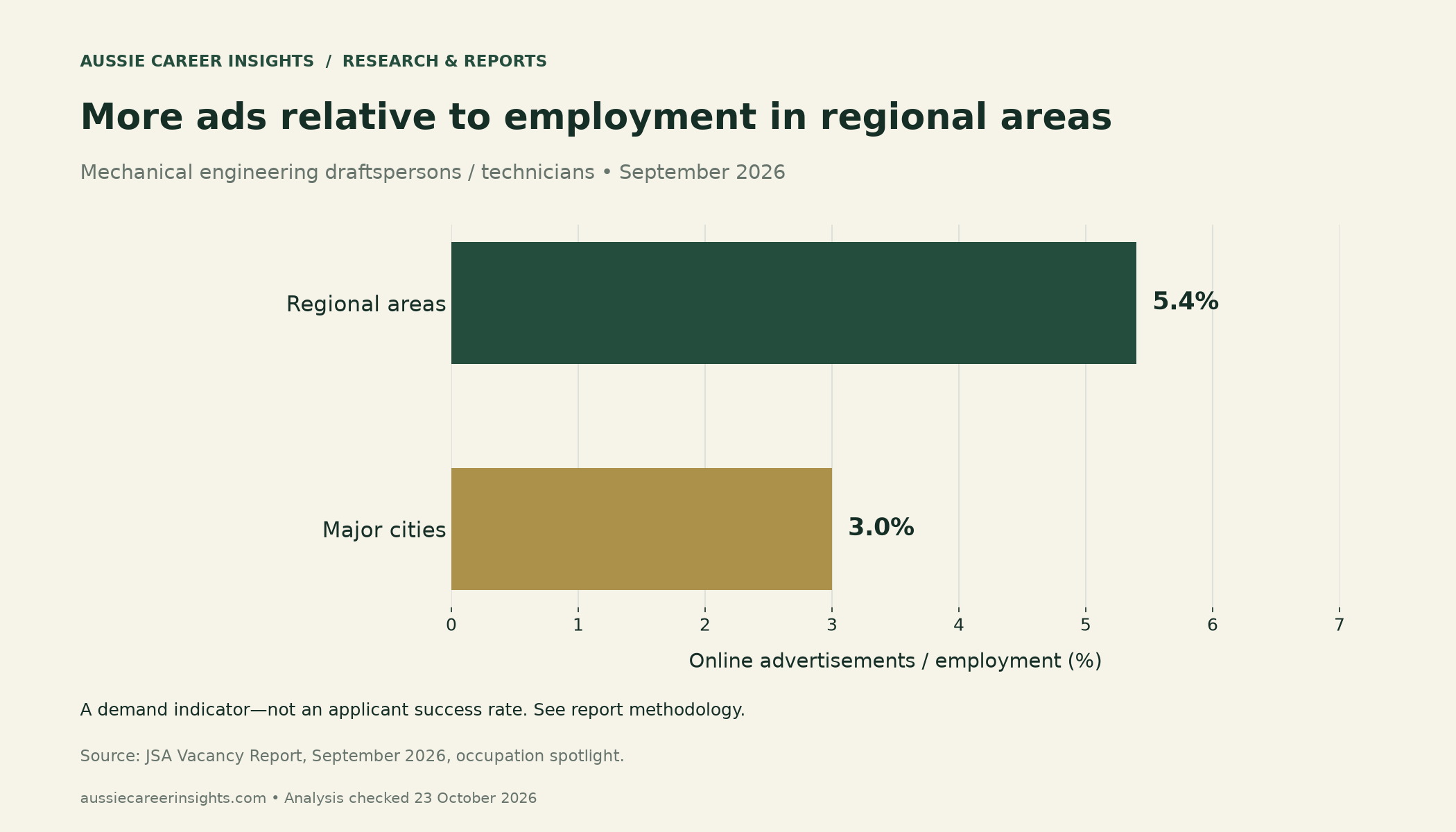
The regional ratio of 5.4% was 1.8 times the major-city ratio of 3.0%. This is a useful signal for deciding where to investigate employers. It does not mean that moving gives someone 1.8 times the chance of success. Advertising volume, workforce size and hiring outcomes are different measures.
Therefore, start with actual vacancies in places you could realistically live. Check the worksite, expected attendance, salary range and relocation support. Then compare housing, travel and household commitments. A regional label alone says little about whether the move would work for you.
More advertisements do not mean rapid workforce growth
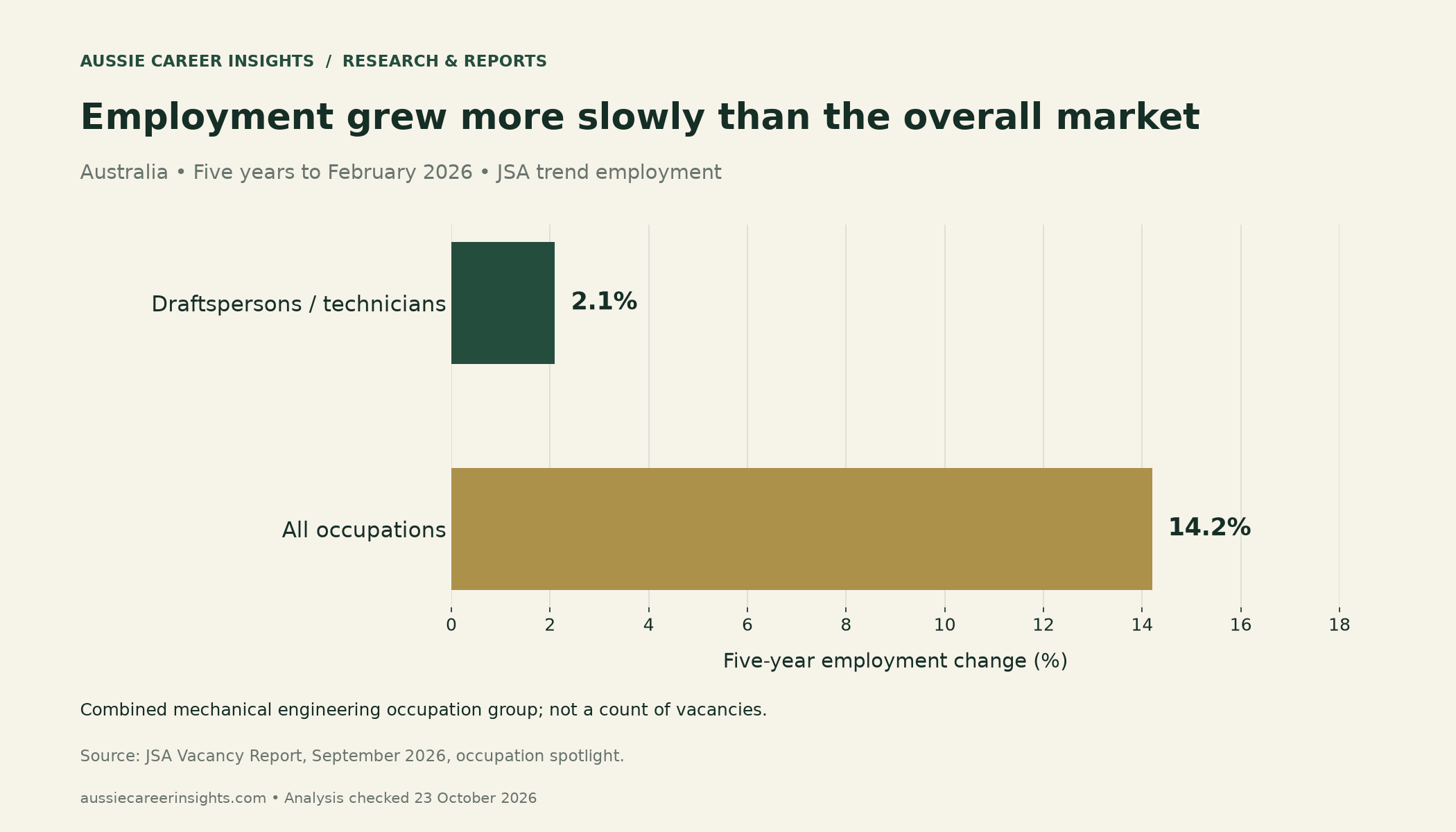
The same JSA spotlight reports only 2.1% employment growth over the five years to February 2026. Across all occupations, growth was 14.2%. The combined group employed about 5,400 people at that point. Thus, the advertising story and the employment-growth story differ substantially.
Advertisements can reflect replacement hiring, hard-to-fill roles or expanding demand. The data do not isolate one explanation for every employer. In particular, a persistent vacancy might require a specific skill combination. Our Australia shortage-list analysis explains why a demand signal is only the beginning of a career decision.
What two employers ask applicants to demonstrate
We reviewed two Australian employers’ own careers pages on 23 October 2026. This is a small, purposive sample, not a representative survey or a count of all open positions. Vacancies and requirements can change. Check the live employer page before applying.
| Employer and role | Published requirements | Application implication |
|---|---|---|
| GTE Technology, Ballarat: Mechanical Engineering Draftsperson | Engineering/trade qualifications or relevant experience; SolidWorks parts and assemblies; drafting standards; production knowledge and drawing management. | Show relevant manufacturing drawings and explain how you handled revisions and production constraints. |
| M.E. Engineering, Beenleigh: Mechanical Piping Draftsperson | AutoCAD and Plant 3D essential; 5–10 years of experience; piping models, isometrics and fabrication documents. | This is an experienced piping role. A general CAD course does not by itself meet the stated experience requirement. |
The distinction between these two roles is useful. One emphasises manufacturing assemblies; the other focuses on industrial piping. Consequently, a generic list of software packages may conceal a poor fit. Read the deliverables and required level of independence as carefully as the job title.
M.E. Engineering also specifies current Australian residence and full working rights. That is a condition of this particular listing, not evidence that every drafting employer has the same policy. Applicants with overseas experience should ask each employer how it assesses their qualifications and project evidence. Never infer sponsorship from a shortage label.
Mechanical drafting jobs and historical pay
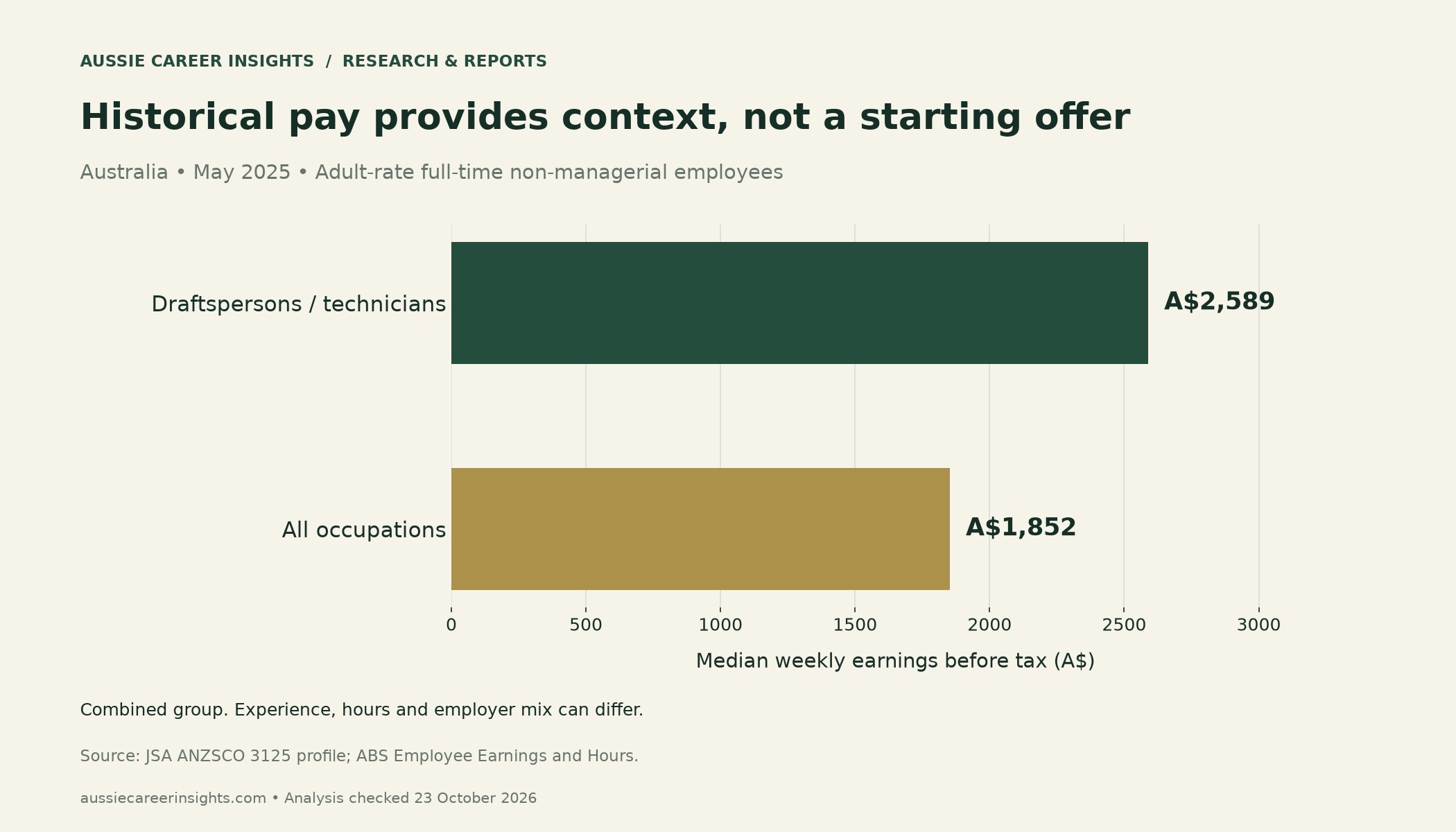
JSA’s historical ANZSCO profile records median weekly earnings of A$2,589 for the combined occupation group, compared with A$1,852 across occupations. The difference is A$737. These May 2025 figures cover adult-rate full-time non-managerial employees before tax and salary sacrifice. They are not graduate or entry-level offers.
Ask for the actual base pay, expected hours, overtime treatment and superannuation arrangements. Compare those written terms with your current situation. Also consider the cost of any training and the time needed to build relevant experience. A national median cannot settle that calculation.
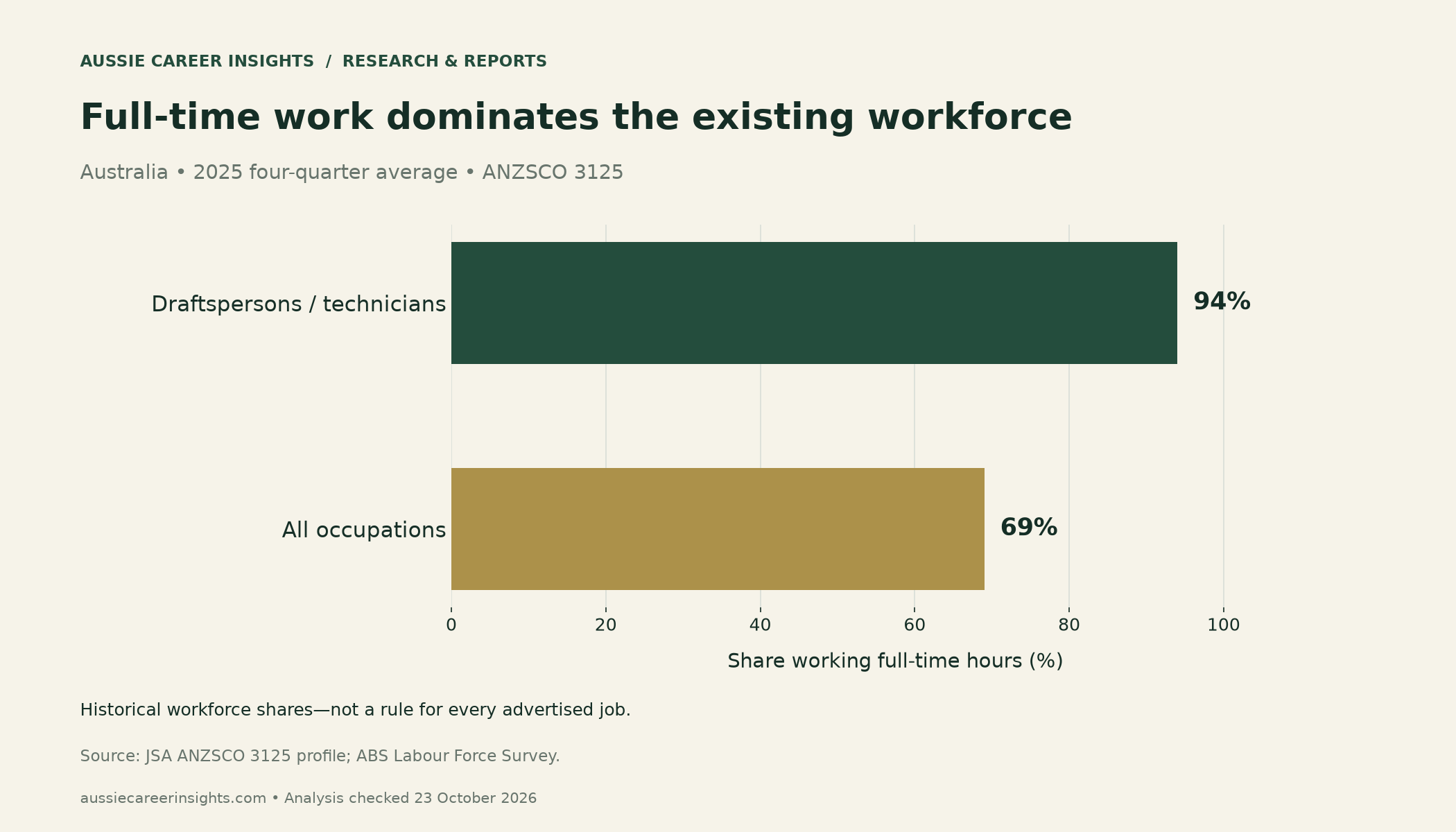
Full-time work was especially common in this group. If you need part-time hours or a gradual transition, investigate that early. An employer’s flexibility, supervision and project schedule matter more than assuming that every role follows the national pattern.
Qualifications show varied histories, not an entry checklist
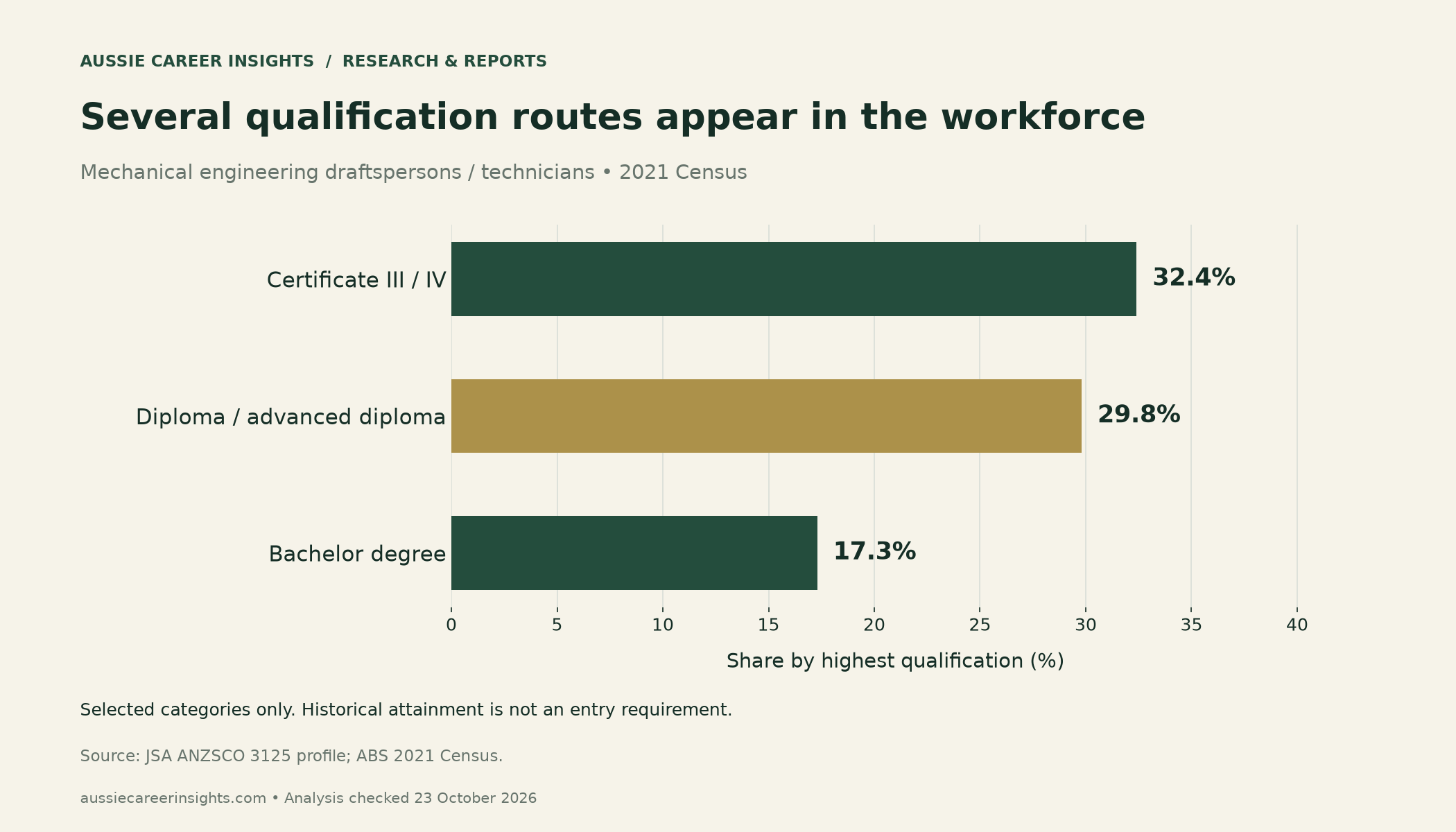
The qualification mix suggests several backgrounds within the existing workforce. Nevertheless, it cannot tell you which course will secure a specific job. Match a prospective course to the work you intend to do. Ask providers about practical projects, assessment, software access and the experience they expect at entry.
This article deliberately uses dated ANZSCO figures to match the vacancy spotlight’s occupation group. Those profiles are now frozen. JSA has begun publishing replacement OSCA content, which will expand as data become available. Do not splice the two classifications into a trend without checking their definitions.
Your Personalized Career Strategy
Unlock your potential with tailored career consulting. Get clear, actionable steps designed for your success. Start now!
Get StartedBuild a portfolio around evidence employers can assess

The following worksheet is our practical synthesis, not a measured hiring formula. Choose evidence that matches the role. Explain what you personally produced, what someone else checked and where you still need support.
| Evidence | What to explain |
|---|---|
| Annotated part or assembly drawing | Purpose, dimensions, materials and the decisions you made. |
| Revision example | What changed, why it changed and how you controlled the version. |
| Production or constructability check | A practical constraint and how you resolved or escalated it. |
| Software example | The relevant package, the task completed and your level of independence. |
| Skills gap plan | A specific missing skill, a realistic learning route and evidence you will produce. |
Remove confidential client and employer information. Better still, create an original practice project when sharing rights are unclear. A small, relevant example with a clear explanation can be more useful than an impressive image whose authorship is uncertain.
Finally, compare this route with other options using the same household assumptions. Our construction careers research separates training, earnings and employer conditions. Mechanical drafting jobs deserve that same careful comparison before a major commitment.
Methodology and reusable comparison data
Research checked on 23 October 2026. The vacancy charts use the September 2026 JSA report. Historical pay, hours and qualifications come from the ANZSCO 3125 occupation profile. The group includes both mechanical engineering draftspersons and technicians; its figures must not be presented as estimates for junior draftspersons alone.
| Comparison | Values | Reference period |
|---|---|---|
| Ads relative to employment | Regional 5.4%; major cities 3.0% | September 2026 spotlight |
| Employment growth | Combined group 2.1%; all occupations 14.2% | Five years to February 2026 |
| Weekly median earnings | Combined group A$2,589; all A$1,852 | May 2025 |
| Full-time share | Combined group 94%; all 69% | 2025 four-quarter average |
| Selected highest qualifications | Certificate III/IV 32.4%; diploma 29.8%; bachelor 17.3% | 2021 Census |
Calculations: 5.4 ÷ 3.0 = 1.8; 14.2 − 2.1 = 12.1 percentage points; A$2,589 − A$1,852 = A$737. We retain each measure’s period and population rather than combining them into a ranking. The two employer examples illustrate differences and do not establish market-wide hiring requirements.
Charts: Aussie Career Insights analysis of JSA and ABS figures. Reuse comparison values with the source, date and limitations intact. The featured and portfolio illustrations are AI-generated and do not depict the employers reviewed.


