



Overview of Sustainable Urban Planning Principles in Australia
Core Principles of Sustainable Urban Planning
Australian urban planners prioritize environmental stewardship in their projects.
They focus on reducing carbon footprints and conserving natural resources.
Moreover, planners emphasize creating walkable neighborhoods to reduce car dependence.
Urban green spaces form a critical part of their sustainable design strategies.
In addition, water management and recycling efforts are integral to planning.
Integrating Social and Economic Sustainability
Planners aim to build communities that support social inclusion and diversity.
They design accessible public transport to enhance mobility for all residents.
Affordable housing initiatives ensure economic sustainability within urban areas.
Furthermore, mixed-use developments encourage local businesses and job creation.
Community engagement plays a vital role throughout the urban planning process.
Innovative Techniques and Technologies
Australian cities adopt smart technologies to monitor and reduce energy usage.
They implement renewable energy solutions, such as solar panels, in urban designs.
Additionally, planners use Geographic Information Systems to optimize land use.
Green building standards guide architects and developers toward sustainable outcomes.
Collaboration between government agencies and private firms drives innovation.
Your Personalized Career Strategy
Unlock your potential with tailored career consulting. Get clear, actionable steps designed for your success. Start now!
Get StartedExamples of Sustainable Urban Planning in Action
The Barangaroo precinct in Sydney showcases sustainable waterfront development.
Melbourne’s Docklands project integrates green spaces and energy efficiency.
Brisbane offers extensive cycling infrastructure promoting active transport.
Perth incorporates water-sensitive urban design for drought resilience.
These projects highlight the practical success of Australia’s planning principles.
Role of Environmental Impact Assessments in Community Design
Ensuring Sustainable Development
Environmental impact assessments (EIAs) play a crucial role in sustainable community design.
They help urban planners identify potential environmental risks early in the planning process.
By doing so, planners avoid or minimize harmful effects on natural ecosystems and resources.
Moreover, EIAs promote informed decision-making that balances development with environmental preservation.
Consequently, communities become more resilient and environmentally responsible over time.
Integrating Environmental Factors into Planning
EIAs require consideration of multiple environmental factors such as flora, fauna, air, and water quality.
Urban planners collaborate with environmental scientists like Dr. Grace Remington to collect accurate data.
Likewise, specialists from Verdant Consulting analyze this data to predict possible impacts.
Next, planners incorporate mitigation strategies to reduce negative consequences in project designs.
Stand Out with a Resume That Gets Results
Your career is worth more than a generic template. Let us craft a resume and cover letter that showcase your unique strengths and help you secure that dream job.
Get HiredThis integration fosters cleaner, healthier, and more livable urban spaces for residents.
Community Engagement and Transparency
EIAs encourage meaningful engagement with local communities and stakeholders.
For example, the Sydney-based firm EcoUrban Solutions facilitates public consultations throughout the assessment.
These discussions allow residents to voice concerns and contribute valuable local knowledge.
Furthermore, transparency in the EIA process builds trust between developers and communities.
Therefore, community-backed projects often experience smoother implementation and long-term success.
Regulatory Compliance and Risk Management
Governments mandate EIAs to ensure that new developments meet environmental laws and policies.
Urban planners like Marcus Lenton from Greenfield Designs ensure projects comply with Australian regulations.
In addition, EIAs help anticipate and manage risks related to soil erosion, flooding, and pollution.
Thus, EIAs act as vital tools for minimizing liabilities and protecting public health.
Ultimately, they support sustainable urban growth in rapidly expanding Australian regions.
Benefits of Early Environmental Assessments
Conducting EIAs early in the planning phase saves time and reduces unexpected costs later.
Early assessments avoid delays caused by environmental disputes or redesign requirements.
For instance, the Melbourne-based company Urban Insight Pty Ltd successfully applies EIAs to streamline developments.
Transform Your LinkedIn for Maximum Impact
Elevate your professional brand with a LinkedIn profile that attracts recruiters, showcases your expertise, and maximizes opportunities. Stand out in your industry with a profile built for success.
Boost ProfileAdditionally, early detection of impacts enables creative solutions like green corridors and rain gardens.
Such innovations improve biodiversity while enhancing community well-being and aesthetics.
Integration of Green Spaces and Biodiversity Conservation
Promoting Urban Green Spaces
Urban planners prioritize creating green spaces throughout Australian communities.
These areas provide residents with natural environments for recreation and relaxation.
Moreover, green spaces improve air quality and reduce urban heat island effects.
For example, parks, community gardens, and green corridors form vital urban green networks.
Planning teams, such as those led by ecologist Emily Clarkson, collaborate closely with local councils.
They ensure that green spaces meet ecological and social needs simultaneously.
Supporting Native Flora and Fauna
Urban designs incorporate native vegetation to support local wildlife populations.
Planners avoid invasive species that could disrupt natural habitats.
Additionally, these efforts enhance local biodiversity and maintain ecosystem health.
Strategies include planting indigenous trees, shrubs, and grasses ideal for native animals.
For instance, the Sydney Sustainable Design Group developed guidelines for native planting schemes.
Such guidelines balance aesthetic appeal with ecological functionality.
Connecting Habitat Corridors
Creating habitat corridors is essential to maintain species movement in urban areas.
These green links connect isolated pockets of wildlife habitat across the cityscape.
Urban planners work with biologists like Dr. Marcus Reed to map and design these corridors.
They help prevent genetic isolation and support resilient animal populations.
Furthermore, corridors provide residents with continuous green pathways for walking and cycling.
These dual-purpose corridors enhance both ecological sustainability and community wellbeing.
Community Engagement and Stewardship
Successful green space projects require active participation from local communities.
Planners organize educational workshops led by experts such as environmental scientist Lisa Nguyen.
These sessions promote awareness of biodiversity benefits and conservation practices.
Moreover, residents contribute through volunteer planting days and habitat monitoring.
Organizations like GreenWay Alliance partner with councils to foster long-term stewardship.
This engagement strengthens the bond between people and their environment.
Find Out More: The Role of Social Workers in Supporting Vulnerable Australians
Incorporation of Renewable Energy and Energy-Efficient Infrastructure
Adopting Renewable Energy Sources
Urban planners actively integrate renewable energy technologies into community designs.
They prioritize solar power by installing photovoltaic panels on rooftops and community spaces.
Moreover, wind energy complements solar installations, especially in coastal and elevated areas.
Community-scale battery storage systems help store excess energy for later use.
Alongside, they collaborate with local providers such as Solara Energy Partners to ensure smooth implementation.
Designing Energy-Efficient Infrastructure
Planners design buildings with energy efficiency as a core principle.
They specify high-performance insulation to reduce heating and cooling demands.
Furthermore, double-glazed windows allow natural light while minimizing heat loss.
Natural ventilation systems also decrease reliance on mechanical air conditioning.
Public lighting uses LED technology paired with smart sensors to optimize energy consumption.
Integrating Smart Technologies
Smart grids enable communities to monitor and manage energy use in real time.
These systems allow residents to adjust consumption based on demand and supply conditions.
Integrating IoT devices enhances efficiency across transportation, buildings, and utilities.
In partnership with Zephyr Urban Technologies, planners ensure data-driven energy management.
Promoting Sustainable Transportation Infrastructure
Electric vehicle charging stations are incorporated to support clean transportation.
Bike-sharing programs reduce carbon emissions and encourage active travel.
Planners design pedestrian-friendly paths reducing vehicle dependency.
Transit-oriented development clusters amenities near public transportation hubs.
Community Engagement and Education
Planners involve residents through workshops explaining renewable energy benefits.
This approach increases adoption of energy-efficient practices at the household level.
They partner with organizations like EcoFuture Australia for ongoing educational programs.
Community feedback helps refine infrastructure plans for better sustainability outcomes.
You Might Also Like: How Public Health Officials Improve National Wellbeing
Designing Walkable Neighborhoods
Creating Human-Scaled Urban Spaces
Urban planners prioritize human-scaled designs to enhance neighborhood walkability.
They reduce block sizes to encourage shorter and more direct routes for pedestrians.
Moreover, mixed-use developments combine residential, commercial, and recreational spaces closely.
This approach helps residents reach daily needs without relying on cars.
Additionally, wide sidewalks and well-marked pedestrian crossings improve safety.
Integrating Green Spaces and Amenities
City designers include parks and green corridors within walking distances.
These spaces promote outdoor activities and foster social connections.
Consequently, residents enjoy healthier lifestyles and increased community engagement.
Local shops, cafes, and schools are placed strategically for easy access on foot.
Ultimately, this design reduces traffic congestion and pollutant emissions.
Promoting Active Transport
Expanding Cycling Infrastructure
Urban planners develop dedicated bike lanes separated from vehicle traffic.
They connect neighborhoods with safe cycling routes to key destinations.
Bike-sharing programs and secure parking facilities encourage cycling culture.
Furthermore, promotion campaigns highlight cycling’s benefits for health and environment.
Improving Public Transit Accessibility
Integrated transit hubs provide convenient connections between buses, trains, and trams.
Frequent and reliable services reduce dependence on private vehicles.
Transit-oriented developments cluster homes and businesses near stations.
This setup motivates residents to combine walking and public transit in daily commutes.
Encouraging Behavioral Change in Communities
Local governments collaborate with organizations to promote walking and cycling.
They organize community events like walk-to-work days and active travel challenges.
Educational programs raise awareness about active transport advantages.
As a result, sustainable travel habits gradually become a social norm.
Find Out More: The Role of Policy Analysts in Shaping Australia’s Future
Water-sensitive Urban Design and Sustainable Water Management
Principles of Water-sensitive Urban Design
Water-sensitive urban design integrates natural water cycles into city planning.
It reduces environmental impacts while managing stormwater effectively.
Urban planners focus on preserving local waterways and enhancing water quality.
Furthermore, they promote water reuse and reduce demand on potable supplies.
This approach contributes to resilient and livable Australian communities.
Techniques for Managing Stormwater Sustainably
Rain gardens and bioswales help absorb and filter stormwater onsite.
Permeable pavements allow water to infiltrate rather than run off.
Constructed wetlands provide natural treatment for urban runoff.
Additionally, these techniques reduce flooding risks during heavy rain events.
Environmental engineering firms, like ClearWater Innovations, lead innovation in these methods.
Maximizing Stormwater Capture and Reuse
Urban designers install rainwater harvesting systems to collect roof runoff.
This water supports irrigation for parks and reduces mains water use.
Local councils, such as the Bayside Regional Authority, champion these initiatives.
Moreover, greywater recycling helps sustain communal green spaces.
Smart irrigation technologies optimize water use according to real-time conditions.
Community Involvement and Water Education
Public awareness campaigns encourage residents to adopt water-saving practices.
Workshops led by environmental planner Mia Lawson educate on rainwater tank benefits.
Community groups often collaborate to maintain local water-sensitive urban projects.
Engagement strengthens stewardship and supports sustainable water management goals.
Policy and Collaborative Efforts Advancing Water-sensitive Design
State governments enforce regulations that promote sustainable water management.
Collaboration between designers, hydrologists, and ecologists is essential.
Innovative projects by Sapphire Urban Planning integrate multi-disciplinary expertise.
These partnerships ensure designs meet environmental, social, and economic needs.
Consequently, water-sensitive urban design becomes embedded in Australian city planning practices.
Explore Further: The Importance of Community Outreach Workers in Public Service
Community Engagement and Stakeholder Collaboration in Planning
Importance of Inclusive Participation
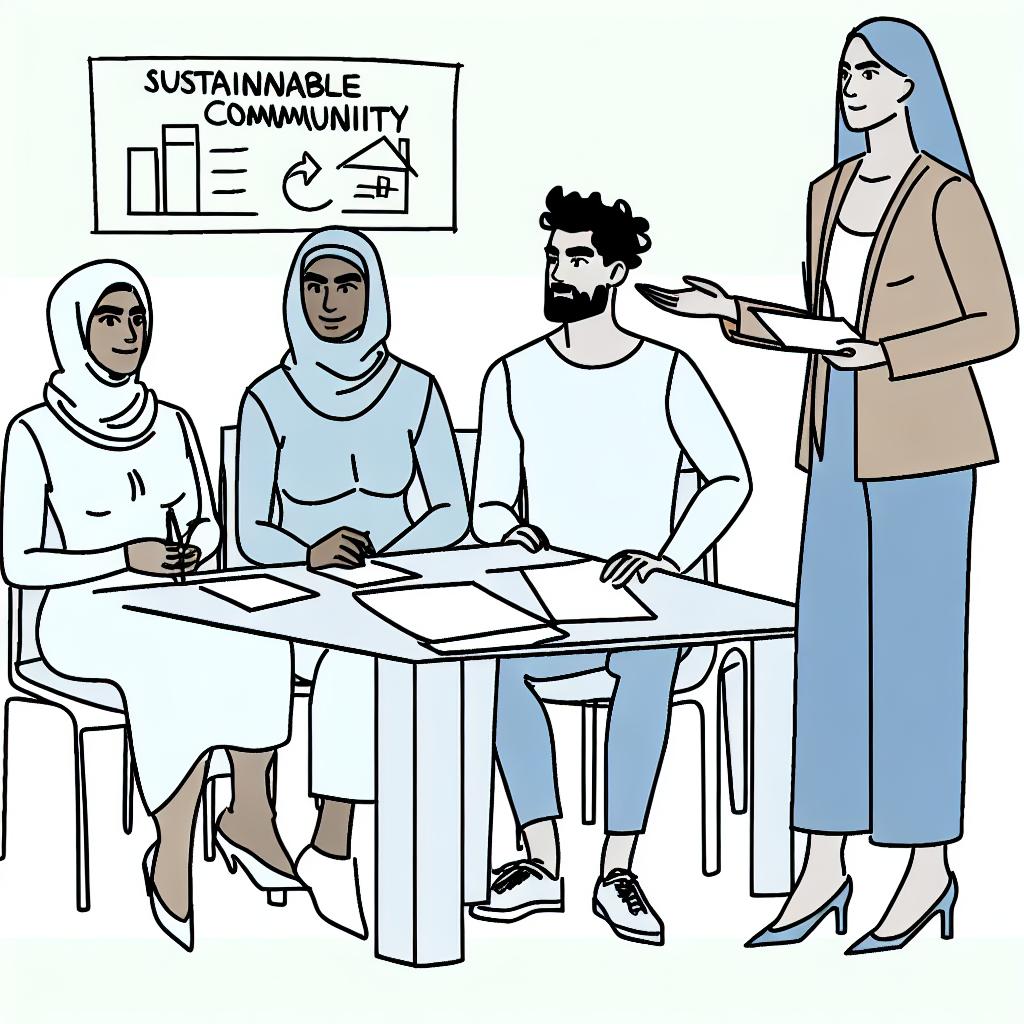
Urban planners actively involve community members in decision-making processes.
This engagement helps identify local needs and preferences early on.
Moreover, it creates a sense of ownership and trust among residents.
Stakeholders provide valuable insights that planners might otherwise overlook.
Consequently, plans are more responsive to diverse groups within the community.
Strategies for Effective Collaboration
Planners organize public forums and workshops to facilitate open dialogue.
They also utilize surveys and digital platforms to gather broader feedback.
Local councils often partner with advocacy groups to represent underheard voices.
Collaborative project teams include experts, government officials, and citizens.
These integrated efforts help align sustainability goals with community values.
Building Partnerships with Key Stakeholders
Successful projects depend on strong relationships with businesses and nonprofits.
For example, Clearview Strategies works closely with Sydney councils.
They coordinate efforts to implement renewable energy solutions and green corridors.
Additionally, Indigenous groups contribute traditional knowledge to planning strategies.
Such partnerships ensure plans respect cultural heritage and environmental stewardship.
Advantages of Collaborative Urban Planning
Joint efforts improve transparency and reduce project objections.
Collaborative planning leads to more innovative and sustainable urban designs.
It increases community resilience by addressing social and environmental challenges.
Furthermore, stakeholders gain a shared commitment to long-term success.
Thus, Australian communities thrive through inclusive and cooperative planning practices.
Challenges and Solutions in Balancing Development with Sustainability
Addressing Urban Growth Pressure
Australian cities experience rapid population growth that pressures urban planners.
They must manage increased housing demands without harming the environment.
Moreover, planners balance expanding infrastructure with preserving natural spaces.
To tackle this, developers like Greenfield Developments collaborate closely with the Perth City Council.
Together, they integrate high-density housing to reduce urban sprawl.
Integrating Environmental Conservation
Urban planners prioritize conserving native flora and fauna in development projects.
They design green corridors to maintain wildlife connectivity across urban areas.
Furthermore, companies such as Southern EcoDesign specialize in eco-sensitive master planning.
These firms incorporate green infrastructure that supports stormwater management naturally.
As a result, cities achieve better air and water quality while maintaining biodiversity.
Incorporating Renewable Energy and Resources
Planners promote the use of solar panels and wind energy in new communities.
Urban projects adopt water-efficient fixtures to reduce consumption significantly.
Additionally, waste management systems encourage recycling and composting at the community level.
For instance, RenewUrban Solutions advises councils to optimize energy use in public spaces.
Consequently, developments decrease their carbon footprint and operational costs.
Enhancing Community Engagement and Social Equity
Successful sustainability efforts require input from local residents and stakeholders.
Planners host workshops and forums to gather community feedback effectively.
The inclusion of diverse voices ensures that development supports social equity.
Urban design firms like Horizon Planning Group emphasize accessible public transport links.
In this way, all residents gain better access to services and employment opportunities.
Utilizing Smart Technology for Sustainable Outcomes
Smart city technologies help monitor energy and water use in real time.
Planners employ data analytics to optimize traffic flow and reduce emissions.
For example, MetroLink Urban Solutions implements sensor networks across Melbourne suburbs.
This technology enables proactive maintenance and efficient resource management.
Therefore, smart systems reinforce long-term sustainability goals within urban developments.
Case Studies of Successful Sustainable Australian Communities
The Community of Newstead, Victoria
Newstead demonstrates how planning integrates sustainability with local culture.
Urban planners collaborated with residents to design energy-efficient homes.
They incorporated extensive green spaces to support biodiversity and recreation.
Moreover, Newstead uses solar power and water recycling extensively throughout the town.
These efforts reduced carbon emissions while fostering community engagement.
Local business owner Emma Lawson cited the positive impact on the town’s economy.
She explained how sustainability attracted eco-conscious visitors and new residents.
Bridgewater in Tasmania’s Sustainable Transformation
Bridgewater showcases effective urban renewal through sustainable initiatives.
Planners focused on affordable housing combined with energy-efficient design.
Public transport accessibility improved, reducing car dependency significantly.
In addition, community gardens promote local food production and social cohesion.
Bridgewater’s renewable energy projects include solar panels on public buildings.
Resident Michael Harper praised the healthier lifestyle options enabled by the redevelopment.
He highlighted cleaner air and more green spaces next to local amenities.
Findhorn in Northern Territory Embraces Circular Economy Principles
Findhorn integrates circular economy concepts in community development.
Urban planners prioritized resource reuse and waste minimization in the design process.
The town’s water management system recycles greywater for gardening and flushing.
Furthermore, shared community spaces encourage collaboration and local entrepreneurship.
Renewable energy, especially wind and solar, powers most residences and infrastructure.
Council member Aisha Reynolds emphasized how these practices lowered long-term costs.
She also noted the increased local involvement strengthened the community’s resilience.
Green Square in Sydney Drives Urban Sustainability
Green Square represents Sydney’s commitment to sustainable urban growth.
Planners integrated mixed-use developments combining residential, commercial, and green areas.
They implemented innovative stormwater management, reducing urban runoff effectively.
Public transport hubs enhance connectivity and reduce private vehicle use.
Housing designs prioritize energy efficiency and natural ventilation.
Architect Mark Wellington emphasized how smart planning created a vibrant, eco-friendly space.
He added the community’s input shaped successful environmental and social policies.
Key Principles from Australian Sustainable Communities
These communities highlight cooperation between planners and residents.
They show how green infrastructure supports environmental goals.
Renewable energy adoption remains a key factor in sustainability success.
Additionally, mixed-use development encourages walkability and reduces emissions.
Local food initiatives increase self-sufficiency and promote healthy living.
Finally, inclusive planning processes build social equity and resilience in communities.
Future Trends and Innovations in Urban Sustainability Planning
Integration of Smart Technologies
Urban planners increasingly adopt smart technologies to enhance sustainability.
For example, EcoGrid Solutions develops intelligent energy management systems in Brisbane.
These systems optimize energy use and reduce carbon footprints effectively.
Moreover, smart sensors assist in monitoring air quality and water usage in real time.
Consequently, communities receive data-driven insights for better resource management.
Advancements in Green Infrastructure
Green infrastructure plays a crucial role in sustainable urban design.
Innovative projects by GreenScape Australia incorporate rain gardens and urban forests.
Such initiatives improve stormwater absorption and enhance biodiversity.
Additionally, green roofs help regulate building temperatures and reduce energy needs.
Green infrastructure contributes to healthier and more resilient communities.
Community-Centered Planning Approaches
Future urban sustainability focuses more on community participation and empowerment.
Urban planner Amelia Thornton leads workshops to involve locals in sustainability decisions.
These collaborative methods ensure that developments reflect residents’ needs and values.
Furthermore, participatory design boosts social cohesion and encourages sustainable behaviors.
Thus, community input becomes integral to planning successful urban environments.
Renewable Energy Integration
Planners prioritize integrating renewable energy sources within urban settings.
SolarSmart Innovations installs solar panels in residential and commercial zones.
This shift reduces reliance on fossil fuels and lowers greenhouse gas emissions.
Furthermore, energy storage technologies increase efficiency and grid stability.
As a result, communities move closer to achieving carbon neutrality goals.
Emphasis on Circular Economy Models
Circular economy principles increasingly influence sustainable urban development.
Companies like ReUse Urban collaborate on waste reduction and material recycling programs.
Urban planners design systems to reclaim resources and minimize landfill use.
In addition, promoting local production and consumption helps close resource loops.
Therefore, cities evolve into low-waste, resource-efficient ecosystems.
Additional Resources
Spatial and socioeconomic inequities in liveability in Australia’s 21 …