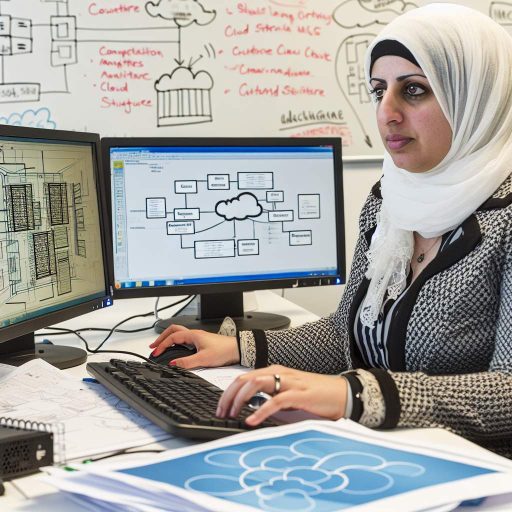




Role of Artificial Intelligence Specialists in Modern Workplaces
Driving Innovation and Efficiency
Artificial intelligence specialists design advanced algorithms that solve complex problems.
They automate routine tasks to increase workplace efficiency.
For example, employees at Veridian Analytics rely on AI to streamline data processing.
As a result, AI experts help organizations reduce operational costs and improve output.
Collaborating Across Diverse Teams
AI specialists work closely with engineers, data scientists, and business managers.
This collaboration promotes the alignment of AI solutions with company goals.
At LuminaTech Solutions, AI professionals integrate insights into marketing strategies effectively.
Therefore, they bridge technical knowledge with practical business applications.
Ensuring Ethical and Responsible AI Use
These specialists prioritize fairness and transparency in AI model development.
They establish guidelines to prevent algorithmic biases and protect user privacy.
For instance, Elara Digital employs AI ethicists to review software before release.
Thus, they maintain public trust and regulatory compliance in AI deployment.
Adapting to Rapid Technological Change
AI experts continuously update their skills to master emerging tools and techniques.
They attend workshops and collaborate with academic institutions like Dakota Research Institute.
This ongoing learning enables them to implement cutting-edge solutions.
Your Personalized Career Strategy
Unlock your potential with tailored career consulting. Get clear, actionable steps designed for your success. Start now!
Get StartedAs a result, companies remain competitive in fast-evolving markets.
Key Skills and Qualifications Required for AI Specialists Shaping the Future of Work
Technical Expertise
AI specialists must master programming languages such as Python.
They also should master programming in R.
Experience with machine learning frameworks like TensorFlow is needed.
Additionally, familiarity with PyTorch is important.
A strong understanding of data structures is crucial.
Understanding algorithms also plays a vital role.
Knowledge of cloud platforms such as AWS enhances deployment skills.
Expertise in Azure cloud solutions adds value.
Proficiency in data preprocessing boosts model accuracy.
Feature engineering skills are essential for AI success.
Mathematical and Analytical Skills
AI professionals require a deep grasp of linear algebra.
They also need understanding of calculus.
Statistics forms the foundation of AI model development.
Stand Out with a Resume That Gets Results
Your career is worth more than a generic template. Let us craft a resume and cover letter that showcase your unique strengths and help you secure that dream job.
Get HiredProbability theory is equally important for AI.
Strong analytical thinking helps solve complex problems efficiently.
Creativity in exploring data patterns fuels innovation.
Soft Skills and Collaboration
Effective communication helps AI specialists explain concepts clearly.
They must convey ideas well to stakeholders.
Teamwork is vital since AI projects are multidisciplinary.
Collaboration across teams drives better project outcomes.
Adaptability allows professionals to stay relevant with fast-changing AI technologies.
Critical thinking supports responsible evaluation of AI ethics.
Understanding implications improves model trustworthiness.
Educational Background and Certifications
Most AI specialists hold degrees in computer science.
Engineering and related fields are common backgrounds.
Advanced degrees such as a Master’s or PhD offer research advantages.
Certifications from recognized platforms validate practical skills.
Transform Your LinkedIn for Maximum Impact
Elevate your professional brand with a LinkedIn profile that attracts recruiters, showcases your expertise, and maximizes opportunities. Stand out in your industry with a profile built for success.
Boost ProfilePlatforms like Coursera or Udacity provide such certifications.
Continual learning is necessary to keep up with emerging AI trends.
Ongoing education ensures familiarity with new tools.
Industry Knowledge and Application
Understanding the specific industry enhances AI solution relevance.
It also increases the impact of AI models.
For example, AI in finance requires knowledge of risk management.
Compliance awareness is critical in financial applications.
Healthcare AI specialists benefit from familiarity with medical regulations.
Domain expertise helps tailor AI to organizational needs.
How AI Specialists Are Transforming Automation and Productivity in Various Industries
Advancing Automation through AI Expertise
AI specialists design intelligent systems that automate complex tasks efficiently.
They integrate machine learning algorithms to replace repetitive manual work.
Moreover, AI experts optimize processes to reduce operational costs significantly.
For example, Luciana Herrera of QTech Solutions developed AI-driven workflows improving accuracy.
This approach enhances scalability and allows businesses to focus on innovation.
Boosting Productivity with AI-Powered Tools
AI specialists build tools that augment human capabilities in the workplace.
They create smart assistants enabling employees to perform tasks faster.
Furthermore, these experts analyze data to identify productivity bottlenecks.
In healthcare, Dr. Rajesh Patel implemented AI diagnostics increasing patient care efficiency.
Consequently, teams achieve higher output with streamlined task management.
Industry-Specific Transformations Enabled by AI Specialists
Manufacturing
AI engineers develop predictive maintenance models to prevent equipment failure.
They automate quality control using computer vision for defect detection.
Jin Park from NovaTech Manufacturing deployed AI robots, accelerating assembly lines.
Finance
AI specialists build fraud detection algorithms securing financial transactions.
They streamline customer service with chatbots that handle inquiries instantly.
Sophia Nguyen at Meridian Finance optimized portfolio management using AI analytics.
Retail
Experts implement recommendation engines personalizing shopper experiences online.
They automate inventory tracking to maintain optimal stock levels.
At Stellar Retail Group, Felipe Marquez introduced AI forecasting tools boosting sales forecasts.
Collaborative Efforts Driving Industry Change
AI specialists collaborate with domain experts to tailor solutions perfectly.
They continuously update AI models using feedback from real-world operations.
Cross-functional teams at Vector Dynamics exemplify this approach, driving sustainable growth.
Thus, AI expertise acts as a catalyst for digital transformation across sectors.
Discover More: What Does a Data Scientist Do? Exploring This High-Demand Role
The Impact of AI on Job Creation and Job Displacement
Job Creation Through AI Innovation
Artificial intelligence drives new opportunities across various industries.
AI specialists like Maya Lin from NuGen Robotics create advanced automation tools.
These innovations generate roles in AI development, data analysis, and system integration.
Startups such as Celeste Analytics expand teams focused on machine learning and AI ethics.
Consequently, new professions emerge, requiring specialized skills and continuous learning.
Moreover, AI enables businesses to launch fresh products and services, increasing workforce demand.
Concerns About Job Displacement
Simultaneously, AI automation replaces repetitive tasks traditionally done by humans.
Ethan Romero, a lead AI engineer at TechWorks Solutions, acknowledges this shift openly.
Positions in manufacturing, customer service, and data entry face notable reductions.
As a result, some employees must reskill or transition to different fields.
However, experts emphasize that AI complements rather than fully replaces human labor.
Therefore, companies focus on retraining workers to collaborate with AI systems effectively.
Strategies to Manage AI’s Effects on Employment
AI specialists advocate proactive strategies to manage job market transitions.
For instance, Ava Chen of Lumina AI recommends investing in education and training programs.
Governments and organizations increasingly partner to promote workforce adaptability.
This approach supports displaced workers while exploiting the benefits of AI advancements.
Furthermore, AI experts stress the importance of ethical deployment to minimize social disruption.
In essence, they envision a future where AI and human talent drive economic growth together.
Perspectives on Workforce Evolution
Experts agree that AI demands a shift in job roles and skills.
Organizations like Quantum Dynamics prioritize hiring AI specialists to lead innovation.
At the same time, companies encourage cross-functional collaboration between AI experts and traditional workers.
Hence, employees develop hybrid skills combining technical knowledge with creativity and critical thinking.
Ultimately, AI specialists see a dynamic, evolving job landscape shaped by technology and human ingenuity.
Explore Further: The Evolution of Game Development Careers in Australia
Collaboration between AI Specialists and Other Professionals to Drive Innovation
Bridging Expertise across Disciplines
AI specialists actively partner with professionals from diverse fields to foster innovation.
For example, machine learning engineers collaborate with healthcare experts at VitalCore Technologies.
This teamwork develops AI-powered diagnostic tools that enhance patient outcomes significantly.
Additionally, data scientists work alongside financial analysts at Silverstone Capital to optimize investment strategies.
This integration harnesses domain expertise and technical skills effectively.
Enhancing Product Development through Teamwork
Collaboration significantly accelerates the product development cycle.
Software developers coordinate with AI researchers to embed intelligent features.
At Nexa Robotics, engineers and AI experts jointly improve robot autonomy and adaptability.
Consequently, products become more user-friendly and efficient.
Moreover, marketing teams provide customer insights that refine AI algorithms.
Driving Business Innovation with Combined Insights
Business strategists collaborate closely with AI specialists to identify new opportunities.
Maria Chen, a strategist at Orion Enterprises, integrates AI forecasts to guide market decisions.
This collaboration creates innovative service offerings and boosts competitiveness.
Furthermore, legal advisors work with AI teams to ensure ethical compliance and protect data privacy.
Thus, firms maintain trust while pursuing advanced AI-driven solutions.
Effective Communication as a Key to Success
Successful collaboration depends on clear and consistent communication.
Regular cross-disciplinary meetings promote shared understanding and alignment.
Tools like Slack and Trello enable real-time coordination among diverse teams.
Frequent knowledge exchanges help overcome technical and domain-specific challenges.
This approach fosters a culture of continuous innovation and mutual respect.
Encouraging Cross-Training and Skill Sharing
Companies increasingly promote cross-training between AI specialists and other professionals.
This strategy builds versatile teams capable of solving complex problems creatively.
The team at AstraTech holds workshops where AI experts explain models to product managers.
Meanwhile, domain specialists share market trends and customer needs with AI developers.
Such skill sharing nurtures innovation and adaptability across the organization.
Examples of Successful Collaborative Innovation
One notable example is the partnership between Innovate Labs and the fintech firm CapitalLink.
Together, they created an AI-driven credit scoring system that improved loan approval rates.
Another case involves teaming data scientists with urban planners to optimize city traffic flow.
This project at UrbanVision reduced congestion and improved commute times substantially.
These examples highlight the transformative power of collaborative innovation across industries.
Delve into the Subject: What It Takes to Be a Cloud Solutions Architect in Australia
Ethical Considerations and Responsibilities AI Specialists Face in the Workplace
Commitment to Transparency
AI specialists must ensure transparency in their algorithms and models.
For instance, Dr. Elena Marquez at Nuvano Technologies advocates clear explanations for AI decisions.
Transparency builds trust among users and stakeholders.
Moreover, it helps identify and address potential biases early.
Addressing Bias and Fairness
AI professionals like Marcus Chen from Viridion Labs actively work to minimize bias.
They regularly evaluate datasets to prevent discrimination.
Additionally, ensuring fairness in AI is crucial for ethical workplace practices.
This commitment promotes equal opportunities for all affected individuals.
Protecting Privacy and Data Security
Privacy protection remains a critical responsibility for AI experts.
At Cythera Innovations, lead engineer Jasmine Khalil enforces strict data security measures.
Safeguarding sensitive information guards against unauthorized access.
Consequently, clients feel more confident in adopting AI technologies.
Promoting Accountability in AI Deployment
Accountability ensures that AI specialists own the outcomes of their systems.
For example, David Kwon at Synapse AI holds regular audits of algorithm performance.
These audits help identify harmful impacts and enable timely corrections.
Hence, accountability aligns technical actions with ethical standards.
Collaborating With Diverse Teams
Inclusive collaboration enhances ethical decision-making in AI projects.
Experts like Sofia Almeida engage with ethicists, legal advisors, and end users.
This approach uncovers varied perspectives and potential concerns.
Ultimately, it strengthens AI’s societal benefit and reduces risks.
Continuous Ethical Education and Awareness
AI specialists commit to ongoing training on emerging ethical issues.
For example, Horizon Analytics offers workshops led by ethicist Raj Patel.
This learning ensures alignment with evolving regulations and societal expectations.
Thus, professionals stay prepared to face new ethical dilemmas responsibly.
See Related Content: Behind the Scenes of Database Administration: A Day in the Life

The Role of AI Specialists in Developing Personalized Employee Experiences and HR Technologies
Enhancing Employee Engagement through AI
AI specialists design systems that understand individual employee preferences effectively.
They use data analytics to tailor work environments for better engagement.
Moreover, adaptive AI platforms learn continuously from employee feedback.
These platforms adjust schedules, workflows, and communication styles accordingly.
Consequently, employees feel more motivated and supported in their roles.
Advancing Recruitment and Talent Acquisition
AI experts develop intelligent recruiting tools that analyze candidate profiles rapidly.
These tools use algorithms to match skills with job requirements precisely.
In addition, they remove unconscious biases by focusing on objective data.
Hiring managers benefit from automated interview scheduling and candidate screening.
Therefore, AI reduces time-to-hire and improves candidate quality significantly.
Optimizing Performance Management Using AI
AI specialists create platforms that monitor and evaluate employee performance in real time.
These technologies use predictive analytics to identify growth opportunities.
Furthermore, AI-driven feedback systems facilitate continuous improvement conversations.
Managers receive actionable insights to support employee development effectively.
As a result, organizations foster a culture of transparency and accountability.
Improving Learning and Development Programs
AI professionals build personalized training modules based on individual learning styles.
They integrate virtual coaches and adaptive learning paths into HR technologies.
This approach ensures employees acquire relevant skills at their own pace.
Additionally, AI tracks progress and adjusts content dynamically to optimize learning.
Consequently, companies maintain a skilled and agile workforce ready for future challenges.
Streamlining Administrative HR Tasks
AI experts automate repetitive HR processes such as payroll and benefits management.
Chatbots handle routine employee queries quickly and accurately.
This automation reduces administrative burdens and minimizes human errors.
HR professionals can then focus on strategic initiatives and employee relations.
Ultimately, AI creates more efficient and responsive HR departments.
Future Trends and Emerging Opportunities for AI Specialists in Evolving Work Environments
Advancements in AI Integration Across Industries
AI specialists increasingly embed intelligent systems in diverse sectors.
For instance, Clara Nguyen leads AI deployment in healthcare diagnostics at Medivance Solutions.
Moreover, these integrations enhance operational efficiency and decision-making.
In manufacturing, companies like Riven Robotics adopt AI for predictive maintenance.
Consequently, AI specialists gain critical roles in cross-disciplinary innovation.
Remote and Hybrid Work Models Expanding AI Roles
AI reshapes workplace flexibility through smart collaboration tools.
Lucas Rey, an AI architect at Synapse Dynamics, designs virtual work environments with adaptive intelligence.
Furthermore, AI-powered analytics optimize productivity in remote teams.
This trend increases demand for specialists who understand workforce dynamics and data privacy.
In addition, AI facilitates seamless integration of global teams and processes.
Focus on Ethical AI and Regulatory Compliance
Emerging regulations create opportunities for AI ethicists specializing in fairness and transparency.
At NovaCore Analytics, Elena Petrova leads efforts on bias detection in AI algorithms.
Thus, companies prioritize ethical AI to build user trust and comply with laws.
AI specialists must stay current with evolving guidelines and auditing techniques.
Therefore, roles focused on responsible AI development will continue to expand significantly.
AI-Driven Personalization and Customer Experience
AI specialists enhance user engagement through personalized content delivery.
For example, Oliver Kim tailors AI recommendation engines for BrightWave Media.
These systems analyze user behavior to improve satisfaction and retention.
Consequently, demand grows for experts combining AI skillsets with marketing insights.
As a result, AI contributes decisively to brand differentiation and customer loyalty.
Opportunities in AI-Enhanced Automation and Augmentation
Automation extends beyond routine tasks to augment complex human activities.
Sarah Lin develops AI solutions at Altura Tech that support decision-making in financial services.
This shift generates new roles focused on human-AI collaboration design.
Additionally, AI specialists work alongside domain experts to create effective hybrid systems.
Therefore, the future workplace will rely heavily on AI-driven augmentation expertise.
Continuous Learning and Skill Development
The rapid evolution of AI technologies demands ongoing specialist education.
Nathaniel Owens launched InspireAI Academy to train professionals in advanced machine learning techniques.
Furthermore, industry certifications become increasingly valuable for career progression.
AI specialists must adapt by mastering emerging frameworks and tools continuously.
This commitment ensures they stay relevant and influential in the evolving job market.
Challenges AI Specialists Encounter When Implementing AI Solutions in Companies
Navigating Organizational Resistance
AI specialists often face resistance from employees reluctant to adopt new technologies.
This resistance stems from fear of job displacement and lack of understanding.
Moreover, some managers doubt AI’s potential benefits and hesitate to allocate resources.
Consequently, specialists must develop clear communication strategies to overcome skepticism.
They also promote training programs to build confidence and skills across teams.
Dealing with Data Quality and Accessibility
Effective AI solutions require high-quality, well-structured data.
However, many companies struggle with fragmented or incomplete datasets.
Additionally, data privacy regulations limit access to sensitive information.
Thus, AI specialists invest significant time in data cleaning and integration processes.
They collaborate closely with data engineers and legal teams to ensure compliance.
Managing Complex Technical Integration
Integrating AI systems into existing IT infrastructure presents technical hurdles.
Legacy systems often lack compatibility with modern AI platforms.
Furthermore, limited IT budgets constrain the scope of integration projects.
As a result, AI specialists design flexible, scalable solutions tailored to company capabilities.
They also perform rigorous testing to minimize disruptions during deployment.
Aligning AI Solutions with Business Goals
AI initiatives must deliver measurable value aligned with strategic objectives.
Sometimes, companies pursue AI adoption without clear use cases.
This disconnection leads to wasted resources and unmet expectations.
Therefore, AI specialists work closely with executives to define realistic goals.
They emphasize iterative development and continuous feedback from stakeholders.
Addressing Ethical and Bias Concerns
AI models can unintentionally perpetuate biases present in training data.
Such biases risk damaging company reputation and facing regulatory scrutiny.
AI specialists implement fairness checks and diverse datasets to mitigate bias.
They also advocate for transparent AI decision-making processes within organizations.
Ethical AI practices become a cornerstone in building trust among users and clients.
Case Studies Showcasing AI Specialists Successfully Driving Organizational Change
Transforming Customer Support at Veridian Tech
AI specialist Elena Martinez led a project to revolutionize Veridian Tech’s customer service.
She implemented an intelligent chatbot that handled common inquiries instantly.
This innovation reduced response times significantly and increased customer satisfaction.
Moreover, the AI system provided valuable insights for continuous improvement.
As a result, the support team focused more on complex issues, enhancing productivity.
Optimizing Supply Chain Management for Greenfield Manufacturing
Marcus Chen introduced predictive analytics at Greenfield Manufacturing to optimize supply chains.
He developed AI models that forecasted demand with remarkable accuracy.
Consequently, inventory costs dropped while product availability improved.
Additionally, the AI tools detected potential bottlenecks early, preventing delays.
Greenfield Manufacturing reported operational efficiency gains within months after adoption.
Enhancing Talent Acquisition at Nova Financial Services
Sophia Patel transformed recruitment processes by deploying AI-driven candidate screening at Nova Financial Services.
The system shortlisted candidates based on skills and cultural fit efficiently.
Furthermore, bias in hiring decisions was notably reduced due to algorithmic fairness measures.
This improvement led to faster hiring cycles and higher employee retention rates.
HR teams embraced AI tools as essential partners in decision-making processes.
Revamping Marketing Strategies with Data Insights at Lumina Retail
AI consultant Javier Alvarez collaborated with Lumina Retail to enhance marketing campaigns.
He integrated machine learning algorithms that segmented customers more effectively.
This approach enabled personalized promotions that boosted engagement significantly.
Moreover, marketing spend was optimized by targeting high-potential audience groups.
Lumina Retail witnessed increased sales and brand loyalty following AI integration.
Driving Innovation Through AI Training at Solaris Energy
Data scientist Anika Rao spearheaded an AI upskilling program at Solaris Energy.
The initiative empowered employees to leverage AI tools in their daily tasks.
Consequently, innovation accelerated as teams identified new operational efficiencies.
Leaders recognized AI specialists as crucial change agents within the organization.
This cultural shift strengthened Solaris Energy’s competitiveness in the evolving market.
Additional Resources
AI, automation, and the future of work: Ten things to solve for …
AI revolutionizing industries worldwide: A comprehensive overview …